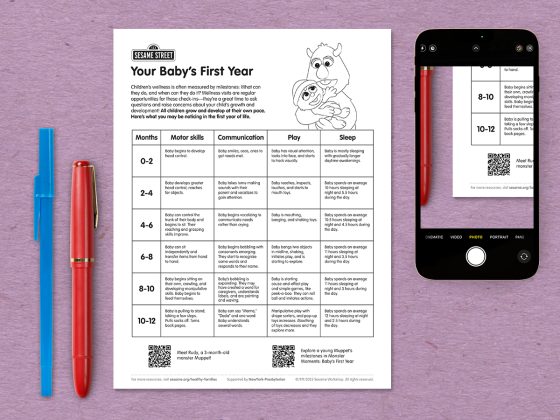
Milestones: Your Baby’s First Year
All children grow and develop at their own pace; use this chart to guide your expectations and observations so you can talk to your child’s pediatrician about questions or concerns.
Children’s wellness is often measured by milestones: What can they do, and when can they do it? How are they growing and developing physically, emotionally, and socially? How are their language skills developing?
Regular wellness visits with your child’s pediatrician are great opportunities for these check-ins — they’re the perfect time to ask questions and raise concerns about your child’s growth and development.
It’s good to ask for help as early as you have concerns — you are your child’s first and best advocate! The first three years of life are a period of rapid brain development, so by raising any concerns early, you can make sure your child gets the support they need to thrive. Early intervention may also help prevent or lessen the need for more support later on.
Here’s what you may be noticing in the first year of life.
Learn more about developmental milestone checklists here.
Wellness visits are regular opportunities for these check-ins — they’re a great time to ask questions and raise concerns about your child’s growth and development! All children grow and develop at their own pace. Here’s what you may be noticing in the first year of life.
| Months | Motor Skills | Communication | Play | Sleep |
|---|---|---|---|---|
| 0 – 2 | Baby begins to develop head control. | Baby smiles, coos, cries to get needs met. | Baby has visual attention, looks into face, and starts to track visually. | Baby is mostly sleeping with gradually longer daytime awakenings. |
| 2 – 4 | Baby develops greater head control; reaches for objects. | Baby takes turns making sounds with their parent and vocalizes to gain attention. | Baby reaches, inspects, touches, and starts to mouth toys. | Baby spends an average 10 hours sleeping at night and 5.5 hours during the day. |
| 4 – 6 | Baby can control the trunk of their body and begins to sit. Their reaching and grasping skills improve. | Baby begins vocalizing to communicate needs rather than crying. | Baby is mouthing, banging, and shaking toys. | Baby spends an average 10.5 hours sleeping at night and 4.5 hours during the day. |
| 6 -8 | Baby can sit independently and transfer items from hand to hand. | Baby begins babbling with consonants emerging. They start to recognize some words and responds to their name. | Baby bangs two objects in midline, shaking, initiates play, and is starting to explore. | Baby spends an average 11 hours sleeping at night and 3.5 hours during the day. |
| 8 – 10 | Baby begins sitting on their own, crawling, and developing manipulative skills. Baby begins to feed themselves. | Baby’s babbling is expanding. They may have created a word for caregivers, understands labels, and are pointing and waving. | Baby is starting cause-and-effect play and simple games, like peek-a-boo. They can roll ball and imitates actions. | Baby spends an average 11 hours sleeping at night and 3 hours during the day. |
| 10 – 12 | Baby is pulling to stand, taking a few steps. Pulls socks off. Turns book pages. | Baby can say “Mama,” “Dada” and one word. Baby understands several words. | Manipulative play with shape sorters, and pop-up toys increases. Mouthing of toys decreases and they explore more. | Baby spends an average 12 hours sleeping at night and 2.5 hours during the day. |
Meet Rudy, a 3-month-old monster Muppet!
Explore a young Muppet’s milestones in Monster Moments: Baby’s First Year
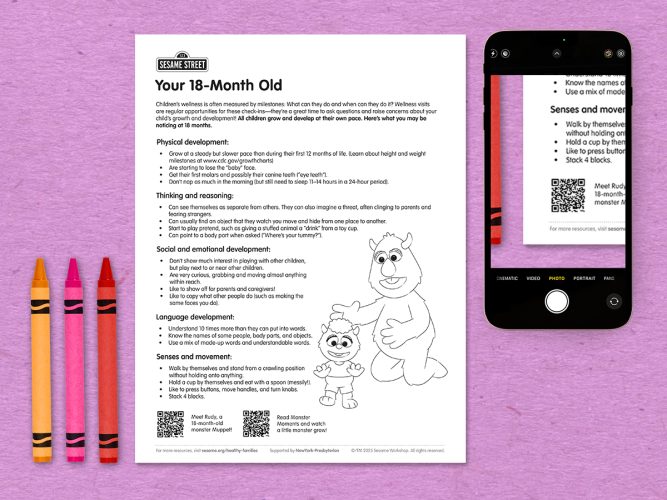
Milestones: Your 18-Month Old
All children grow and develop at their own pace; use this chart to guide your expectations and observations so you can talk to your child’s pediatrician about questions or concerns.
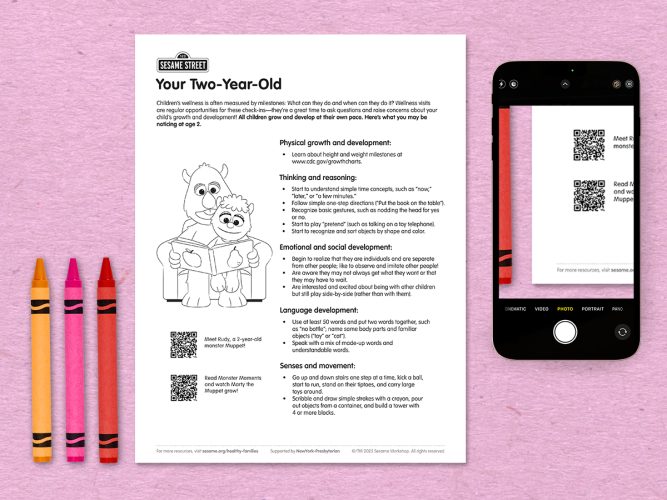
Milestones: Your Two-Year-Old
All children grow and develop at their own pace; use this chart to guide your expectations and observations so you can talk to your child’s pediatrician about questions or concerns.
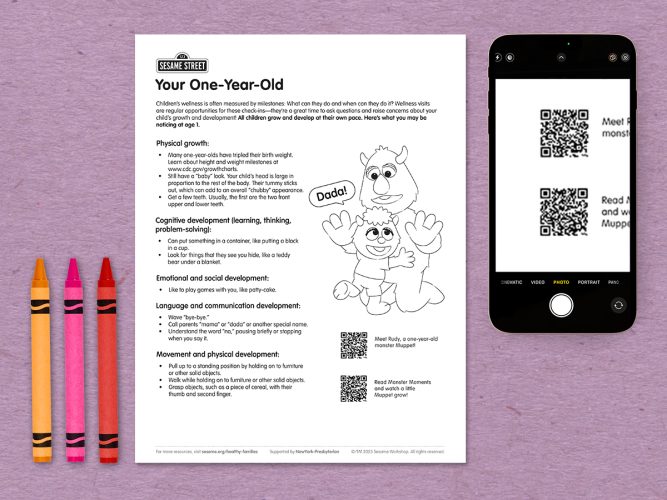
Milestones: Your One-Year-Old
All children grow and develop at their own pace; use this chart to guide your expectations and observations so you can talk to your child’s pediatrician about questions or concerns.
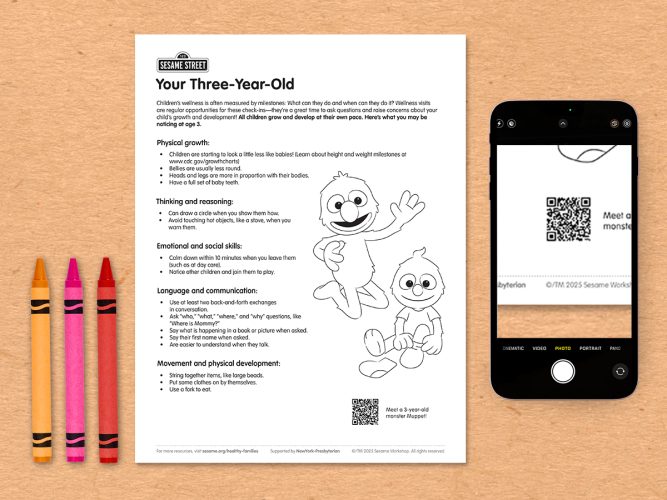
Milestones: Your Three-Year-Old
All children grow and develop at their own pace; use this chart to guide your expectations and observations so you can talk to your child’s pediatrician about questions or concerns.
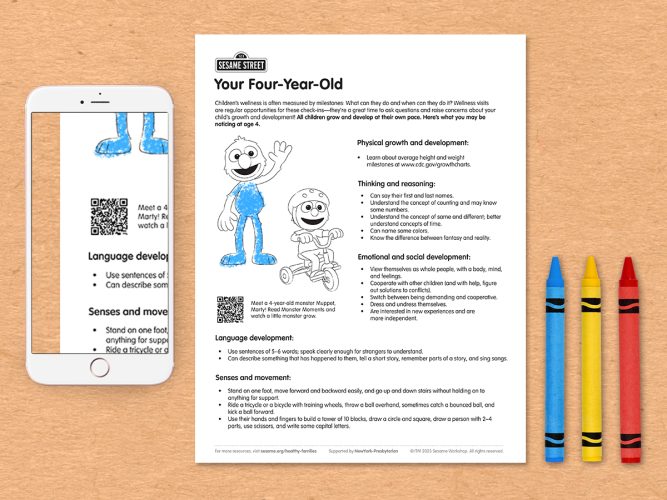
Milestones: Your Four-Year-Old
All children grow and develop at their own pace; use this chart to guide your expectations and observations so you can talk to your child’s pediatrician about questions or concerns.
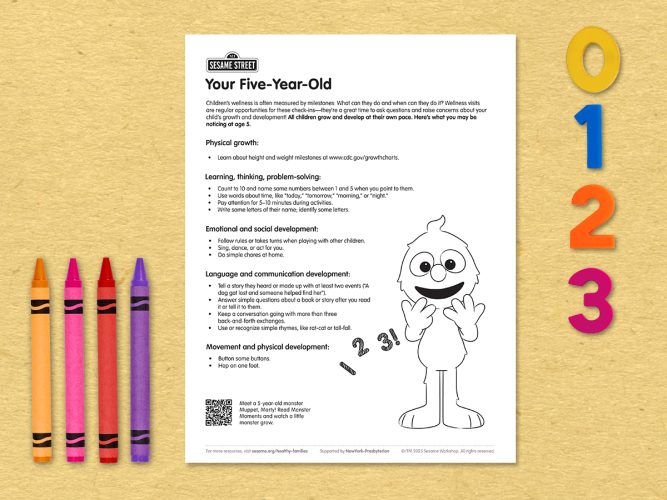
Milestones: Your Five-Year-Old
All children grow and develop at their own pace; use this chart to guide your expectations and observations so you can talk to your child’s pediatrician about questions or concerns.
