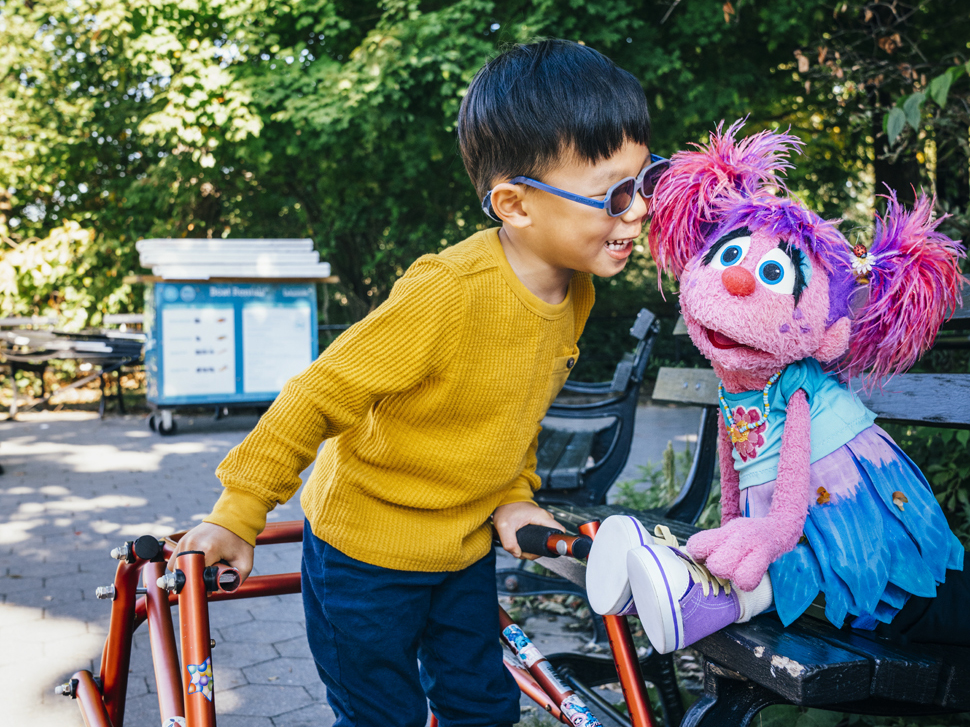
K is for Kind — 10 Years Later
K is for Kind Study 2026
Download PDFA decade after our landmark study, Sesame again asks caregivers how they see kindness in their children and the world around them.
By Kim Foulds, Ph.D., VP, Research & Evaluation
Back in 2016, our Sesame Workshop research team set out to understand how families thought about kindness and the role it plays in children’s lives. Now, as families navigate a dramatically different social and cultural landscape, we wanted to understand what has changed, what has endured, and what parents’ perspectives can tell us about the role of kindness in children’s lives today.
In interviews with 2,080 parents and caregivers of children aged 3 to 8 across all 50 U.S. states, our findings revealed a striking contrast: parents are increasingly concerned that children are growing up in an unkind world, even as they see their own children as kinder and more resilient.
More than half (54%) say kindness is not a priority for most people, compared with 43% in 2016, but more than nine in 10 (92%) rate their own children highly for kindness, up five percentage points since 2016
Encouragingly, kindness appears to be showing up spontaneously in children’s everyday lives. Parents reported that approximately 95% of the kind acts they observed were initiated by children without prompting, suggesting that even young children are recognizing opportunities to help, include, comfort, and care for others and choosing to act on them.
Parents also see kindness as a quality that can be strengthened over time, underscoring the important role adults can play in modeling kindness and helping children build on instincts they are already demonstrating.
“K is for Kind” 2026 Key Findings
- 80% of parents often worry that the world is an unkind place for children, up from 70% in 2016.
- 54% say kindness is not a priority for most people, up from 43%.
- Parents give the average American a 2.81 out of 5 for kindness.
- 92% rate their own child highly for kindness, up five percentage points from 2016.
- 74% rate their child highly for resilience, up 12 percentage points.
- 64% say empathy matters more than good manners, compared with 41% in 2016.
- 56% favor compassion over confidence, compared with 48% in 2016.
- Caregivers report that approximately 95% of children’s kind acts are spontaneously initiated by the child.
What we found is both notable and hopeful. Parents may worry that kindness is becoming harder to find in the world around them, but they see it thriving in their own children — who, by choosing to act in caring ways, model behaviors that can inspire kindness in others. These findings remind us that even in challenging times, children are showing us that kindness, compassion, and resilience can grow.
These findings give us a clearer picture of what families need today and how Sesame Workshop can continue supporting children as they learn to navigate the world with kindness and resilience.
Reaching kids and families around the world through the power of media.

Elmo’s Just Checking In: How Are You Doing?
The State of Well-Being Report
Lessons and Impacts of the Ahlan Simsim TV Program
A study in pre-primary classrooms in Jordan on children’s emotional development.

Identity Matters Study
Explore parents’ and educators’ perceptions of children’s social identity development.