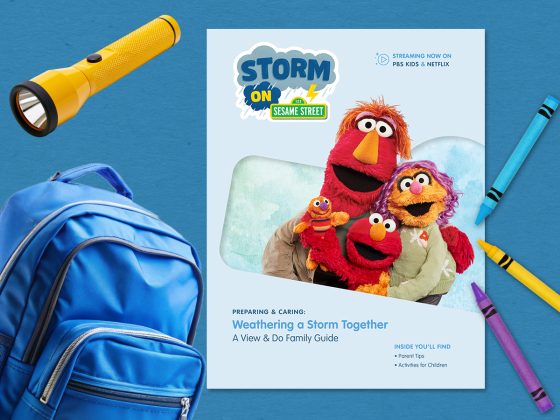
Weathering a Storm Together: Storm on Sesame Street View and Do Family Guide
A family view + do guide to pair with an extra special episode of Sesame Street, Storm on Sesame Street.
Not all days are sunny days… in fact, some can be pretty stormy. Watch Storm on Sesame Street wherever you get Sesame Street, then use this guide to extend the learning with parent tips and activities for children.
Preview the guide below:
As a parent or caregiver, you’ll do anything to keep your family safe.
You already know storms present tough challenges: flooding, power outages, water contamination, displacement, and more. It’s helpful to remember that these experiences don’t have to be traumatic for little ones—your support and care in scary moments can shape their experiences before, during, and after the storm. Like the grown-ups in Storm on Sesame Street, you have the power to nurture and build your child’s resilience by focusing on:
- ways to prepare for the storm as a family
- learning about all the community helpers that know how to keep us safe
- the power of community connections
 HANDLING STORMS, AGE BY AGE
Children of all ages benefit from plenty of hugs! Offer reassurance that you know how to keep them safe. You’ll also want to be mindful of images in the news media showing the storm and its effects; young children may think it is happening again and again, in real time.
For children under age 3, offer simple explanations such as: A storm is coming. There will be a lot of wind and rain. I know how to keep us safe. Lots of helpers will be helping us, too.
For children ages 3 and up:
- Together, keep track of a storm online to see where it is moving and
how fast. Some children may be particularly curious about the science of extreme weather; you can find answers together online - When children have questions, offer honest answers without giving more information than they are asking for.
- Talk about the word courage. In the special, Elmo learns that courage is feeling scared and still helping others. Explain that we feel courageous when we do something difficult or try new things, even if we are a little afraid or unsure. It can take courage to talk about our feelings and ask for help!
- Remind them that, just like in the special, they have important roles to play in helping the family through tough times. They can be good teachers to younger siblings!
 Sesame Weather Report
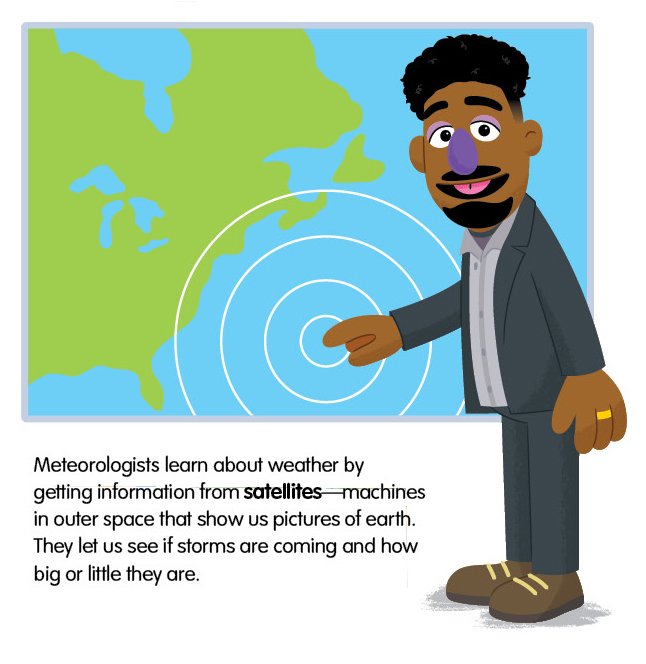
Elijah here! Like my friend Sandy Squalls, I’m a weather forecaster, or meteorologist. I’m a scientist who studies the weather — and part of my job is to tell people about storms that are coming.
Storms can cause strong, fast wind, and LOTS of rain.
All the rain makes giant puddles, which can cause floods. Water can get inside homes and buildings, and wind can damage them. WHOOSH…the sound of wind and rain outside can be very loud!
Before a storm, sometimes people need to evacuate to stay safe. When we evacuate, we leave a dangerous place and go to a safer one. Weather forecasters and other helpers let everyone know what to do and where to go and also tell you when it’s safe to go back outside!
BE A REPORTER
Pretend to be a meteorologist like Elijah and Sandy Squalls! Before, during, or after the storm, use words to describe what is happening outside where you are. Talk about all the different things the grown-ups in your home and neighborhood are doing to keep everyone safe.
Make A Plan
As you prepare for the storm, let the children know that getting ready for storms (or any emergency!) is something we can all do together as a community and that there are lots of helpers working hard to make sure you will be okay. Emphasize that there are many things you can all do to stay safe and make things better.
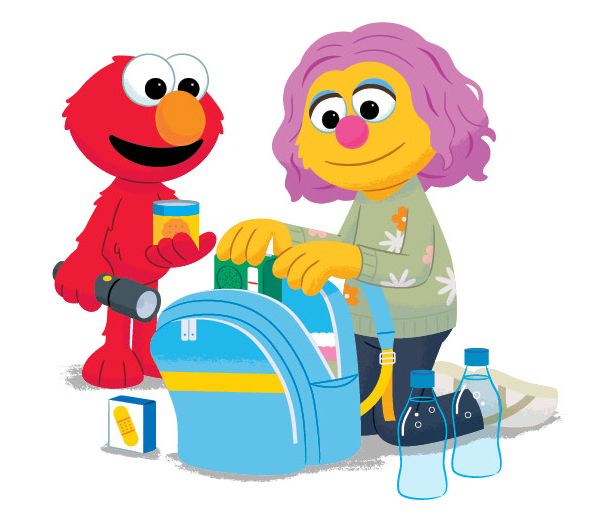
Gather all the food, water, and medicine your family needs (have a 1-month supply of medication in a child-proof container and gather all medical supplies or equipment). Older children may be able to help pack supplies. Organize your supplies into a Go-Kit. You might also practice “pantry preparedness” by gathering non-perishable supplies.
- A Go-Kit has at least three days of supplies that you can carry with you (water, food, pet food, batteries/solar chargers, medications, and special items — like loveys, toys, or crayons).
- Pantry Preparedness means having at least two weeks of non-perishable supplies on hand
 STAY ALERT!
Sign up for text alerts that can help you plan how to stay safe:
- A WATCH means be prepared.
- A WARNING means take action.
Know where you’re going if you need to evacuate (whether to an emergency shelter or to stay with friends or family), and keep a list of phone numbers of friends, family, and neighbors.
Plan to Play
As grown-ups prepare for the storm, children will have lots of opportunities to practice patience! Remind them that playing on their own is an important way they can help. Below are some activities children can do independently or with very little supervision. You can also do them together during the storm when everyone needs to stay inside.
Children can:
- Play with sock puppets like the ones in the special. On old clean socks, draw simple faces with marker and invite children to act out any stories they want.
- Move it out! Children may need to move to get their energy out and also work through big feelings. Suggest they move their bodies like the wind or run, dance, jump, spin around, or simply shake their bodies out.
- Do quiet, calming activities like coloring, drawing, playing with blocks, playing board games, or looking at books
TAKE A MINI-BREAK!
If you can, take time for comforting family moments such as a group hug or one of the ideas below.
Belly Breathe. Show children how to lie down and place their hands or a lovey on their belly: “Hold your hands (or lovey) right on your belly. Now slowly breathe in and then slowly breathe out. Focus on your hands (or lovey) moving out and in with your tummy. Try it three times: Belly in, belly out.”
Be a Tree! Invite children to stand straight and tall as they reach high, swaying their arms in the wind. Show them how to do tree pose and invite them to practice on their own: “Stand tall with your feet together. Lift one foot slightly. Now rest that foot above your other ankle. Stretch out your arms. Try to balance as you slowly breathe in from our nose, out from our mouth.” Younger children may be better able to do the pose on the left; challenge older children to try the one on the right.

 WEATHER IT TOGETHER
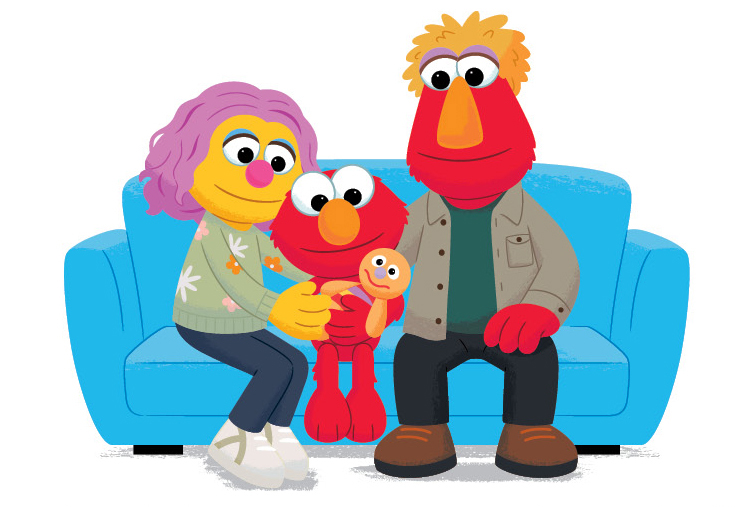
Sing along with your friends from Sesame Street!
Whoa oh oh,
oh the storm may be outside,
but we’re right here and by your side.
If you’re scared or have a fright,
we’ll hold you close and tight.
Let the thunder crack and boom…
we’re together inside this room.
Whoa oh oh, when we’re together…
we’ll get through any weather.
I’m here, I’m here for you.
Let’s laugh and have some fun,
wait until the storm is done.
Our friends are all around…
this is where the love is found.
Whoa oh oh, Elmo believes, believes in you!
With courage we’ll make it through.
When we’re together…
we’ll get through any weather.
Together me and you! Together me and you!
COMFORTING & SOOTHING CHILDREN
Before and after the storm, you might:
- Sing the song to one another.
- Suggest that children sing or hum the song to their lovey or to a younger sibling.
- Offer hugs, handholding, and lots of affection.
- Cuddle under a blanket together.
- Distract children by playing games, reading stories, coloring, and so on.
- Video chat or call friends and family near or far (if you have power). For instance, children may
love seeing grandma’s face as she sings a favorite lullaby
After the Storm: Powerful Helpers
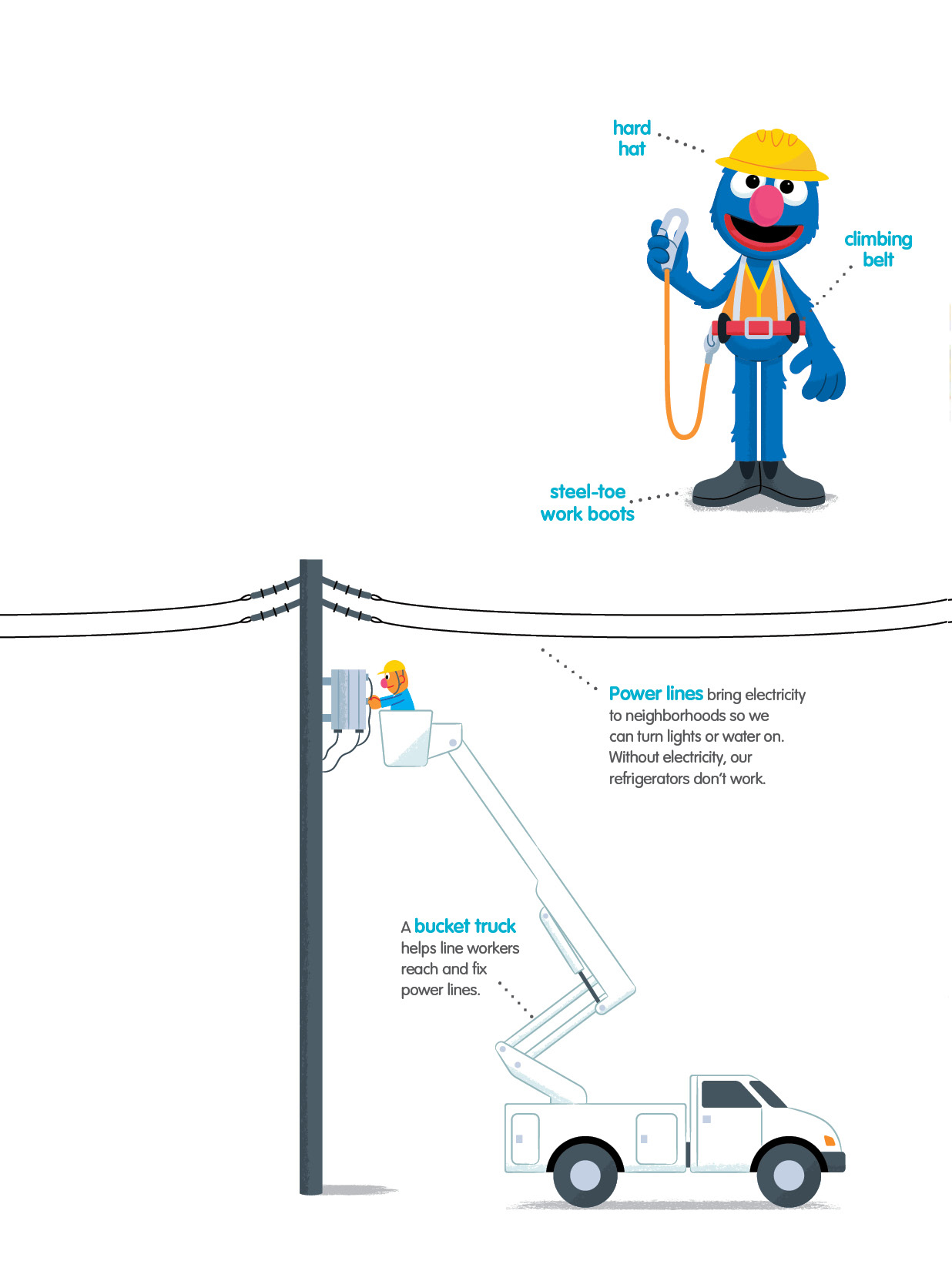
Talk together about the helpers you saw in
the special, and name more (firefighters,
paramedics, sanitation workers, police
officers, shelter workers, and so on).
Explain that line workers help fix power
lines so electricity can come back to our
neighborhoods after a big storm.
 THE NO-POWER PICNIC
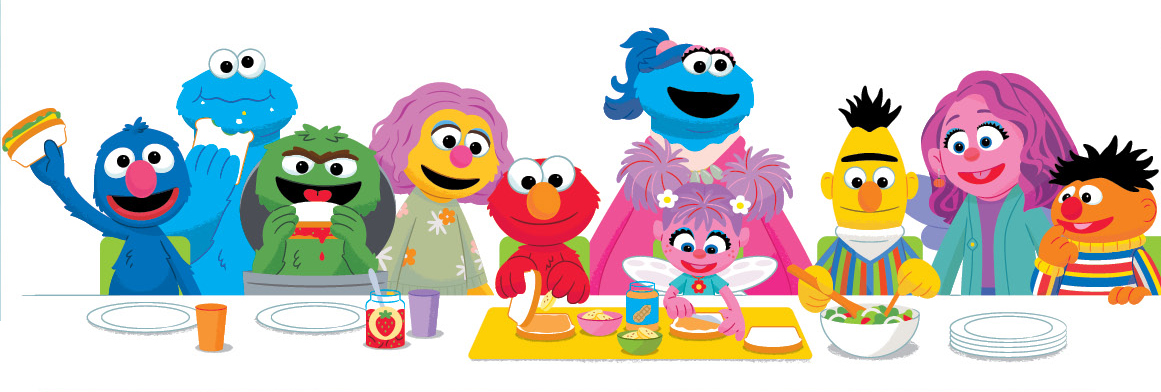
When the power is out, sharing food with neighbors is a great way to take care of one another. Read this story aloud to your child and encourage them to act out the words or phrases in bold.
Uh-oh… the lights went out! There was no power on Sesame Street. That
meant the food in the refrigerator and freezer would not stay cold
“When will the power be back?” asked Elmo.
“Well, we don’t know exactly,” Mommy said. “But I do know it’s lunch time…
maybe we can have a No-Power Picnic.”
“What’s that?” asked Elmo. Then… knock, knock, knock! It was Grover with a jar of jam.
“I came to share my food,” he says. “It’s my cute, furry little way of helping.”
“Great idea!” Mommy said. “One little help can make a big difference.”
Knock, knock, knock. Abby and Maggie Cadabby brought a bowl of sliced apples
and bunch of bananas. Knock, knock, knock. It was Cookie Monster and his
Mommy with a jar of peanut butter. Knock, knock, knock. It was Oscar with a can
of tuna and Bert and Ernie with loaves of bread.
Elmo’s Mommy took lettuce and salad dressing out of the refrigerator.
“Let’s eat these before they go bad,” she said. Everyone started working together
to make lunch.
Elmo and Abby spread peanut butter and jelly or tuna on bread. Grover and
Cookie Monster helped put the top slices of bread on the sandwiches. Bert
and Ernie took turns mixing the dressing into the salad. Soon there was enough
lunch for everyone. Oscar loved his tuna and jelly sandwich!
“We may not have electricity,” Grover said as he held his sandwich high.
“But us super-neighbors have a superpower… teamwork!”
A LITTLE HELP
Sing along with your friends on Sesame Street about the little— but important—ways we help one another when times are tough.
A little help! A little help! A little help is all it takes…
to make our street a better place.
(REPEAT)
We can go through something hard,
but I know we’ll make it through.
’Cause you will always be there for me,
and I’ll be there for you!
Oo, your kindness and compassion,
I see them shining through!
A little help! A little help! A little help is all it takes…
to make our street a better place.
LOTS OF LITTLE HELP!
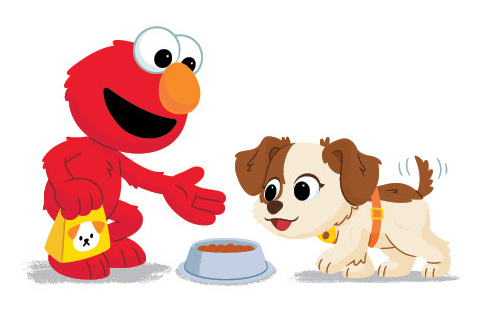
Remind children that all their “little helps” add up to a big difference. For instance, children can:
• Give pets food and water.
• Tell someone a joke when they need to laugh.
• Listen to grown-ups when they tell you ways to stay safe… you can be a helper by being a good listener.
• Be careful to not waste water.
• Say thank you to a special helper.
• Help you as you share food with neighbors or make a community meal.
• Join you in checking in on neighbors.
If children are helping you outside after the storm, make sure they stay close. Be careful — it’s still messy out there.

Preparing for Tornado Season as a Family
Louie and Elmo get ready for Tornado Season.
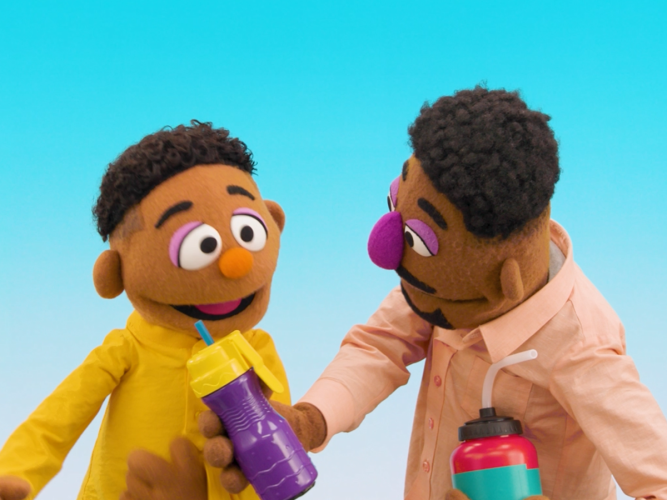
Heatwave Safety with Wes and Elijah
Learn some safety strategies for extra sunny days.

Bert and Ernie’s Blizzard Safety Strategies
Blizzards can be a fun and special time for the whole family... especially when everyone knows how to stay safe.
Responding to Poor Air Quality
Maggie and Abby plan an indoor adventure!

Adjusting to a New Normal
A message of care for those dealing with the long-term effects of an emergency.

You’re Doing Amazing
A message from Sesame Street for caregivers recovering from an emergency.
Still Dancing
A storybook to help children cope with losing something they loved.