
Tuning In
Explore ways to notice, recognize, and respond to children’s needs.
by Zara Abrams, American Psychological Association
You play a key role in creating a caring connection with your child, setting them up for healthy relationships with peers, grown-ups, and themselves! Everything you do is an opportunity to build healthy habits and emotional well-being in children, now and over a lifetime.
Research has shown that attunement — noticing, recognizing, and responding to your child’s emotions and needs — helps your child feel accepted, understood, and safe. Here are some ways to build an even stronger relationship with your child by helping them feel seen, heard, and loved!
- Help children use words to label their feelings. This helps build your child’s emotional intelligence and helps them express their emotions so they can move through the more challenging ones. For example: “I see that you’re crying. Are you feeling sad?” A good follow-up question is: “What’s making you sad?”
- Remind your little one that it’s normal to have feelings like sadness and frustration, and avoid telling them to not feel their feelings (as in “don’t be sad”).
- Remember that behavior is the main way young children communicate their emotions, because they may not have the words. Look for changes in behavior, and consider why they may be occurring (for instance, are they tired or hungry?).
- Listen openly and accept what your child has to say, repeating back to the child what you heard.
- Model how you handle your feelings: show your child that you feel big feelings too, and share how you help yourself by taking belly breaths or going for a walk.
- Repair! If you feel you haven’t responded sensitively to your child’s big feelings, don’t forget that there’s always opportunity to repair by apologizing. Apologizing is a powerful way to show that grown-ups can make mistakes too.
Expert advice was provided by Erlanger Turner, PhD, a licensed psychologist and associate professor of psychology at Pepperdine University’s Graduate School of Education and Psychology in Los Angeles, California, and an expert on parenting and multicultural psychology.
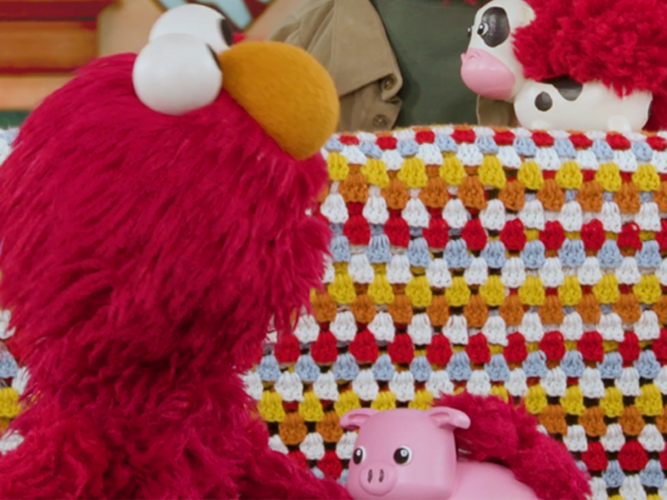
Body Break
A quick, playful body break helps children reset by moving, stretching, and breathing to feel calmer, more focused, and ready for what’s next.
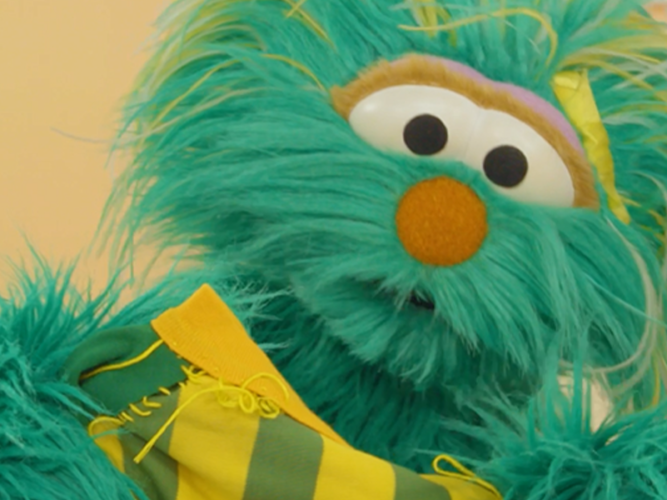
Rosita’s Family Quilt
By adding the shirt to their family quilt, Rosita learns how memories, change, and love can turn something broken into something beautiful.

A Full Cup: Restorative Resources for Providers and the Families They Respond to
Here are strategies for providers to support emotional well-being and self-care.
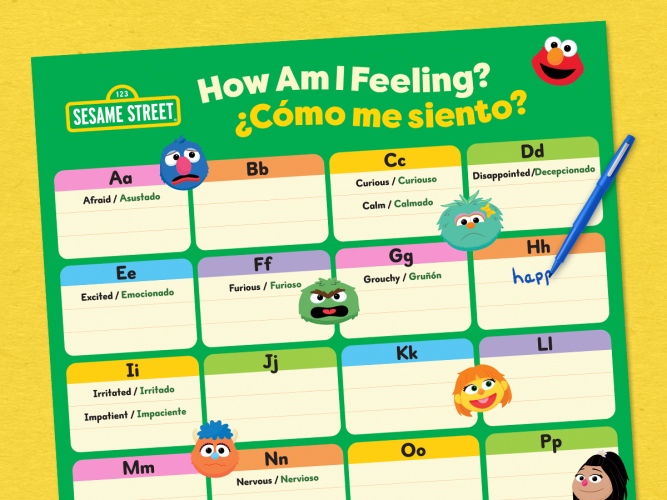
How Am I Feeling? Poster
Use pictures and simple words to help children notice and name feelings.
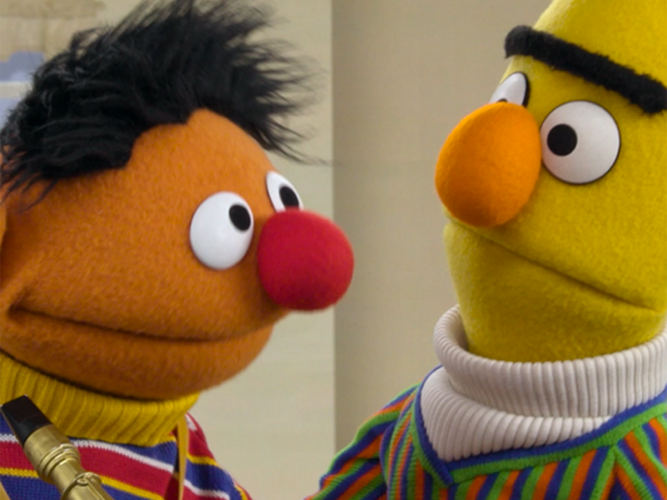
Bert and Ernie Compromise
Bert and Ernie explore how to compromise.

Kindness Comes in Many Forms
Big Bird and Felix discuss Big Bird’s gift for Oscar.
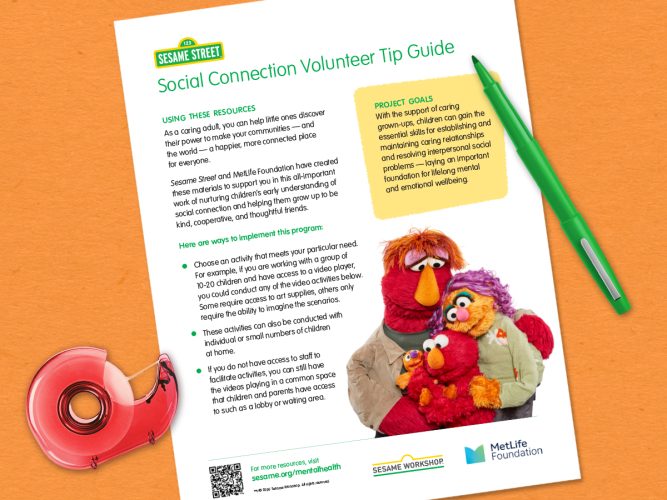
Social Connection Volunteer Guide
Guide with activity suggestions that boost social connection.