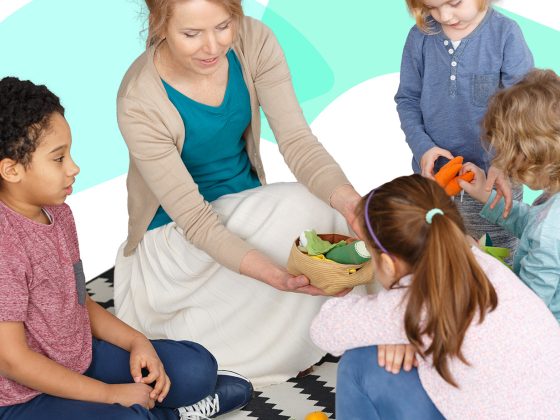
The Power of Parent-Child Relationships
Loving connections between adults and children form a strong foundation for emotional well-being.
As a parent or caregiver, your caring connection with your child plays a powerful role in setting them up for a future of healthy relationships and emotional well-being that can last a lifetime.
Attunement—recognizing and responding to your child’s emotions and needs—is an important way to make your child feel accepted, understood, seen, heard, and safe! Here are some ways to validate your child’s emotional experiences, and strengthen your relationship, based on the latest psychological research.
Help shape your child’s emotional world.
- Help children use words to label their feelings. This helps increase their emotional literacy and shows them how to use words to express their emotions. For example, you might say, “I see that you’re crying. You seem sad. What’s making you sad?”
- Remind your child that it’s okay to have feelings like hurt and frustration (avoiding phrases like “don’t be sad” or “don’t be angry”).
- When you need to handle challenging moments, remember that behavior is the main way young children communicate their emotions. They’re still learning to use words to describe their feelings!
- Look for what’s happening in your child’s world that might be behind their behaviors and emotions. Are they hungry or tired?
PRIDE
Use “PRIDE” to strengthen your connection with your child and make them feel seen, heard, and supported. These are simple ways to show your child you’re paying attention and care about them:
- Praise: Offer positive feedback (“You’re doing such a good job sharing your favorite toy.”)
- Reflect: Repeat something similar to what kids say. (If your child says, “I like playing with these blocks,” you might reflect, “Those blocks are so cool to play with. They’re your favorite!”)
- Imitate: “Copy” children’s play. (If your child is drawing a house, you might say “I think I’ll draw a house, too.”)
- Describe: “Talk through” what your child is doing. (“You drew a colorful rainbow!”)
- Enthusiasm: Show you’re excited to play together! (“I love playing this new game with you. Good job!”)
Source: Erlanger Turner, PhD, an associate professor of psychology at Pepperdine University in Malibu, California, and an expert on child and multicultural psychology.
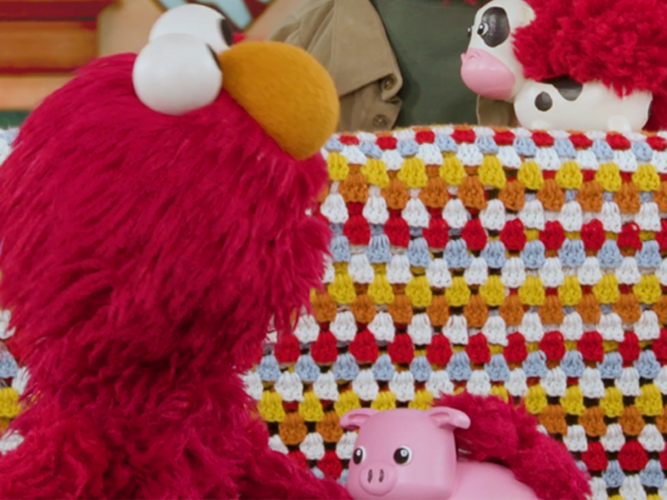
Body Break
A quick, playful body break helps children reset by moving, stretching, and breathing to feel calmer, more focused, and ready for what’s next.
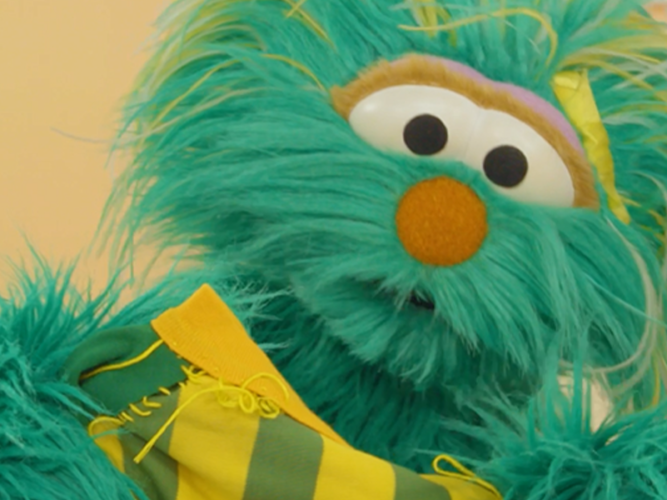
Rosita’s Family Quilt
By adding the shirt to their family quilt, Rosita learns how memories, change, and love can turn something broken into something beautiful.
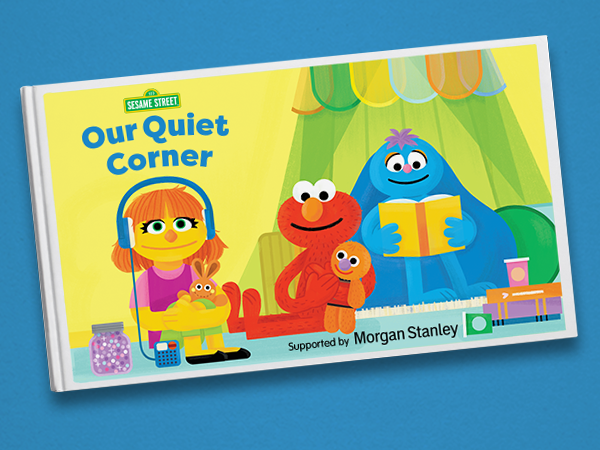
Our Quiet Corner
Sesame friends use a special space to handle big feelings safely.
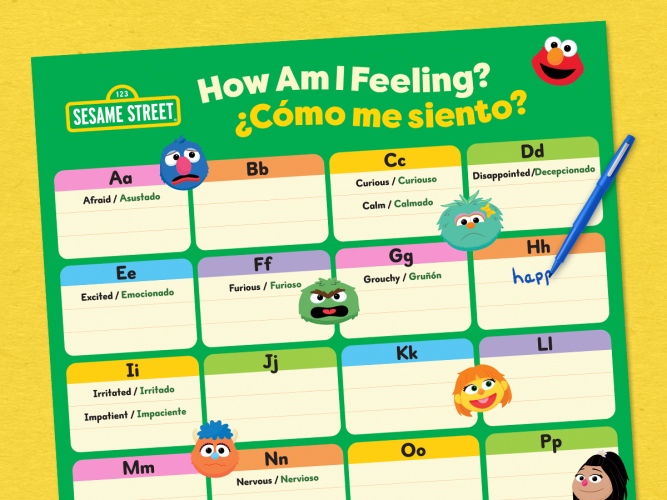
How Am I Feeling? Poster
Use pictures and simple words to help children notice and name feelings.
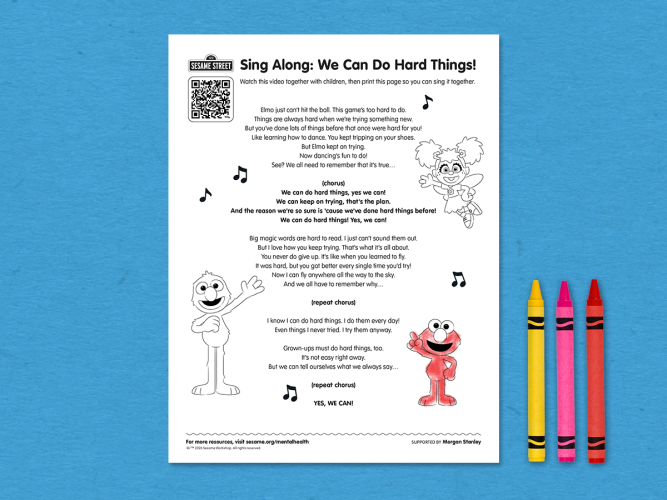
We Can Do Hard Things Lyric Sheet
Sing along to the words to a powerful song about persistence.
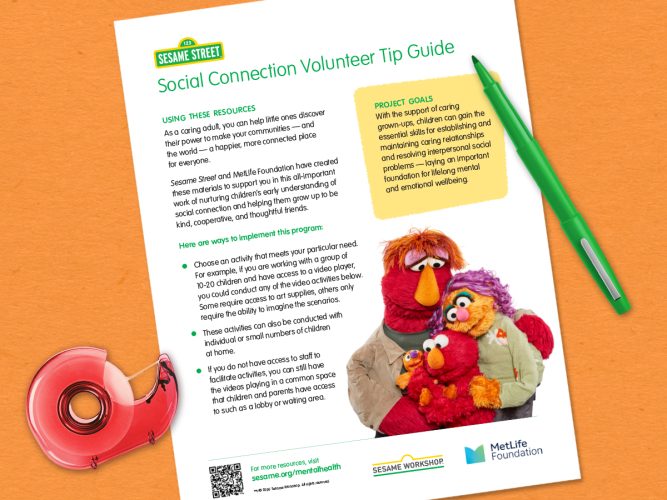
Social Connection Volunteer Guide
Guide with activity suggestions that boost social connection.

Kindness Comes in Many Forms
Big Bird and Felix discuss Big Bird’s gift for Oscar.