
Adult Teamwork in Children’s Tough Moments
When it comes to supporting little ones with big feelings, providers and caregivers work better together!
By Manisha Tare, OT, MPH
While being an early childhood provider is rewarding, it can also be stressful. When children are experiencing big feelings or engaging in challenging behaviors, it’s natural to feel overwhelmed. Children need adults who are emotionally attuned to help them learn how to self-regulate. Children sense and feel more than they can articulate. When there is a disconnect between providers and caregivers, they may feel that tension, and it can impact their sense of safety and security.
Luckily, there are actions caring providers working across early childhood spaces can take to make sure that everyone is calm, cool, and collected as we build community!
Consider some bite-size actions to partner with families:
- Communicate with Intention. Ask families to share any significant events that occurred overnight or in the morning that might affect their child’s mood or behavior so you can support them. Normalize children practicing self-expression and testing boundaries and proactively discuss how everyone prefers to communicate before a situation occurs to minimize misunderstandings and support collaboration. When a child says “No!” or gets upset during transitions, we can name what’s happening in a calm way: “You’re telling me you don’t like stopping yet. You’re practicing using your voice.” Letting families know that this kind of boundary‑testing is part of how children learn to express needs helps everyone respond with curiosity and support, rather than worry or frustration.
- Encourage Consistency: Just like grown‑ups, children feel more comfortable when they know what’s coming next. Gentle, predictable routines can help little ones feel safe and settled, making big feelings easier to manage. You can also share how simple habits—like a consistent bedtime—support children’s ability to calm their bodies and practice skills like taking turns, cooperating, and caring for others.
- Pause, Reflect, then Partner. Take a deep breath! Before talking with families about challenging behaviors, take time to process your own reactions and emotions so you can share your concerns in a non-judgmental way that invites curiosity. Reach out to a trusted colleague or mentor for support. We all benefit from outside reflection.
- Build Bridges. Invite families to share about what’s going at home with regards to changes or any new observations about their child as a gentle way to open up a sensitive conversation. Be specific when sharing about a challenging behavior and its impact when asking families for suggestions on how they might navigate these situations.
- Acknowledge Yourself. Your needs matter. Is there a simple moment at the start or end of your day that helps you feel a little more steady and ready to be with children? It might be as simple as a deep breath before the day begins, a favorite song on the way home, or a joyful moment with a caring friend. Stretch your comfort zone to lean into asking for what you need. We all benefit from support!
How all the adults respond to children’s big feelings matter. Being consistent and responsive are key. This is one of the many reasons self-care is essential. As a natural helper, it’s tempting to keep giving because you genuinely care. However, it’s important to tune in to and be honest with yourself about what you need so you can set healthy boundaries with families, offer clear expectations and, most important, remember that the more you take care of yourself, the more you have to give!
Manisha Tare, OT, MPH, is health specialist for the American Indian and Alaska Native (AIAN) technical assistance team serving tribal head start programs across the country. She has been working in the field of early childhood for more than 20 years, partnering with families and providers as a practitioner, trainer, and consultant.
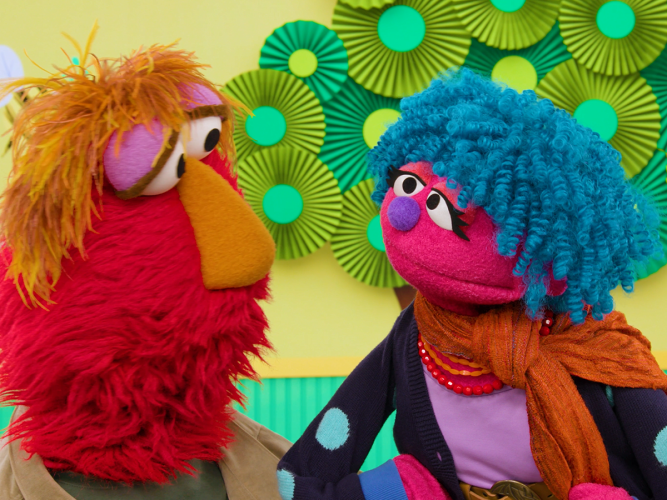
A Time to Talk
Grown-ups work together to help Elmo manage big feelings with care.
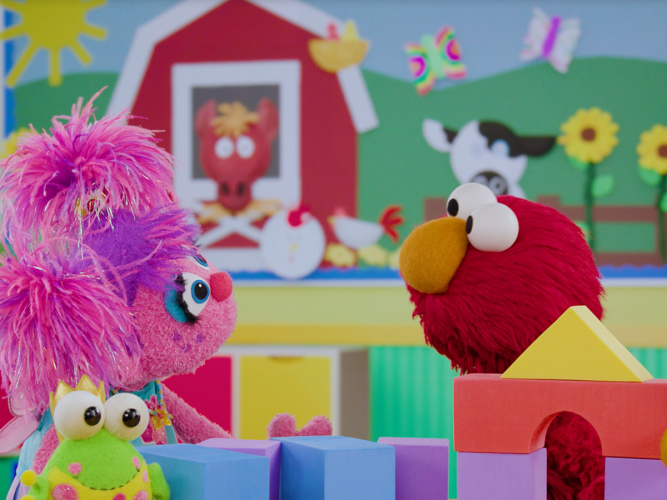
Listen to Understand
Elmo and Abby learn that pausing to listen helps them work as a team.

A Full Cup: Restorative Resources for Providers and the Families They Respond to
Here are strategies for providers to support emotional well-being and self-care.
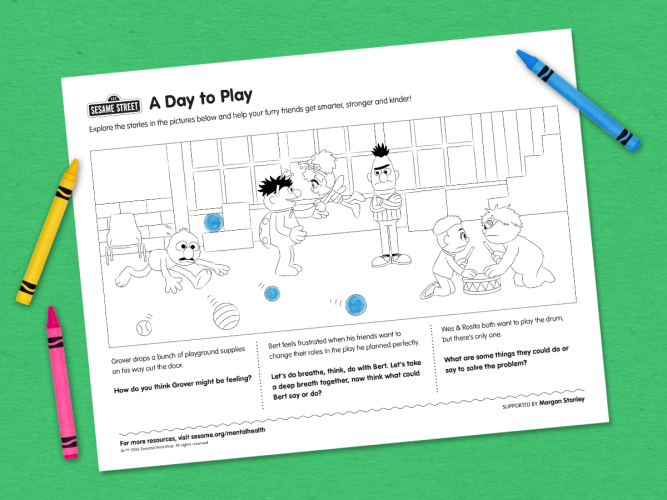
A Day to Play
Color a page of Sesame moments that encourage teamwork and invite reflection!
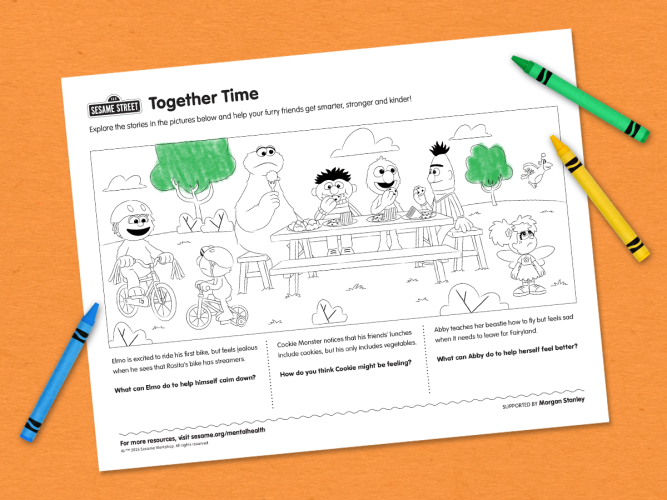
Together Time
Color a page of Sesame moments that encourage teamwork and invite reflection!
Wes Becomes a Perspective Detective
Help children take other’s perspectives.
Zoe’s Get Well Basket
Help children understand that being kind is one way to be a friend.