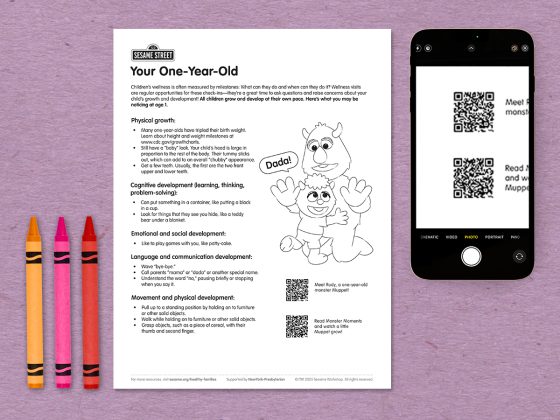
Milestones: Your One-Year-Old
All children grow and develop at their own pace; use this chart to guide your expectations and observations so you can talk to your child’s pediatrician about questions or concerns.
Children’s wellness is often measured by milestones: What can they do, and when can they do it? How are they growing and developing physically, emotionally, and socially? How are their language skills developing?
Regular wellness visits with your child’s pediatrician are great opportunities for these check-ins — they’re the perfect time to ask questions and raise concerns about your child’s growth and development.
It’s good to ask for help as early as you have concerns—you are your child’s first and best advocate! The first three years of life are a period of rapid brain development, so by raising any concerns early, you can make sure your child gets the support they need to thrive. Early intervention may also help prevent or lessen the need for more support later on.
Here’s what you may be noticing at age one.
Learn more about developmental milestone checklists here.
Wellness visits are regular opportunities for these check-ins — they’re a great time to ask questions and raise concerns about your child’s growth and development! All children grow and develop at their own pace. Here’s what you may be noticing at age 1.
Physical growth:
- Many one-year-olds have tripled their birth weight. Learn about height and weight milestones at www.cdc.gov/growthcharts.
- Still have a “baby” look. Your child’s head is large in proportion to the rest of the body. Their tummy sticks out, which can add to an overall “chubby” appearance.
- Get a few teeth. Usually, the first are the two front upper and lower teeth.
Cognitive development (learning, thinking, problem-solving):
- Can put something in a container, like putting a block in a cup.
- Look for things that they see you hide, like a teddy bear under a blanket.
Emotional and social development:
- Like to play games with you, like patty-cake.
Language and communication development:
- Wave “bye-bye.”
- Call parents “mama” or “dada” or another special name.
- Understand the word “no,” pausing briefly or stopping when you say it.
Movement and physical development:
- Pull up to a standing position by holding on to furniture or solid objects.
- Walk while holding on to furniture or other solid objects.
- Grasp objects, such as a piece of cereal, with their thumb and second finger.
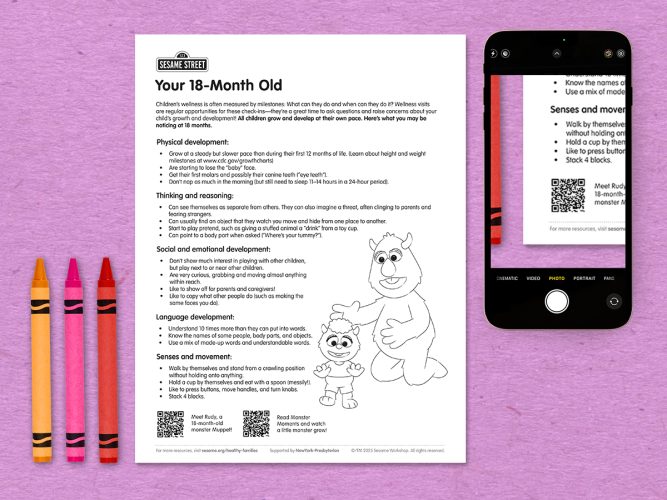
Milestones: Your 18-Month Old
All children grow and develop at their own pace; use this chart to guide your expectations and observations so you can talk to your child’s pediatrician about questions or concerns.
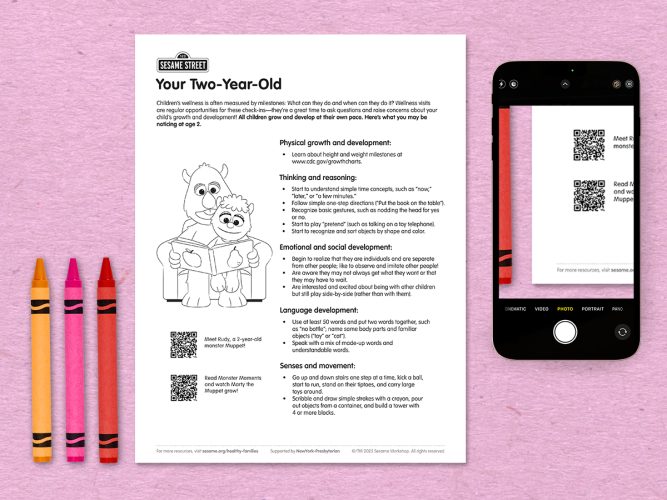
Milestones: Your Two-Year-Old
All children grow and develop at their own pace; use this chart to guide your expectations and observations so you can talk to your child’s pediatrician about questions or concerns.
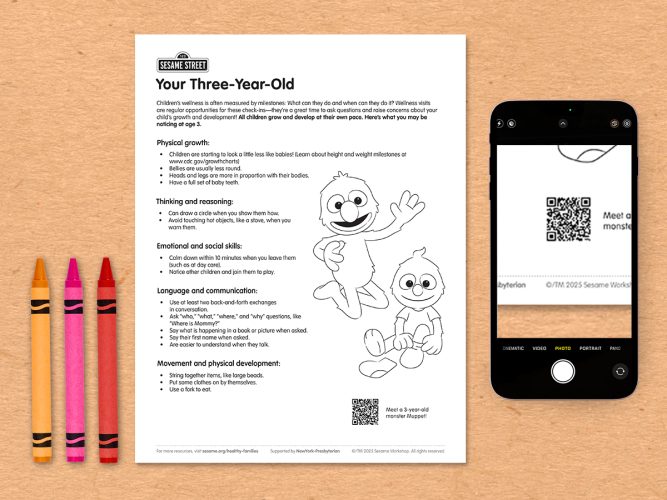
Milestones: Your Three-Year-Old
All children grow and develop at their own pace; use this chart to guide your expectations and observations so you can talk to your child’s pediatrician about questions or concerns.
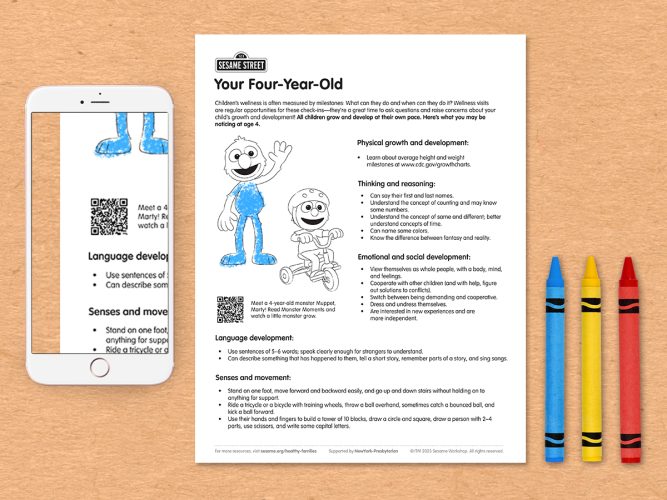
Milestones: Your Four-Year-Old
All children grow and develop at their own pace; use this chart to guide your expectations and observations so you can talk to your child’s pediatrician about questions or concerns.
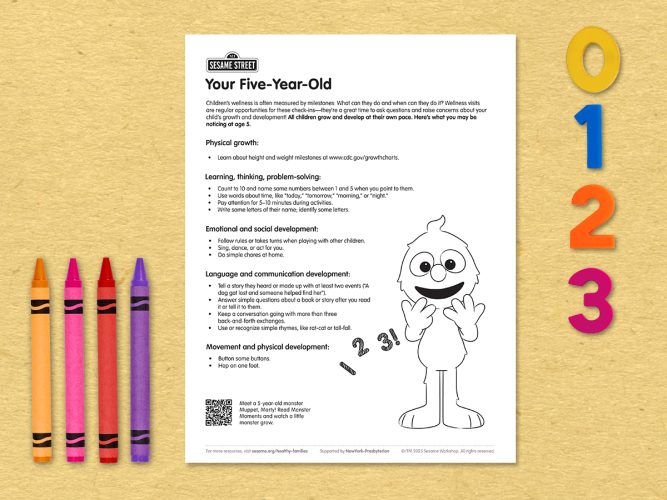
Milestones: Your Five-Year-Old
All children grow and develop at their own pace; use this chart to guide your expectations and observations so you can talk to your child’s pediatrician about questions or concerns.
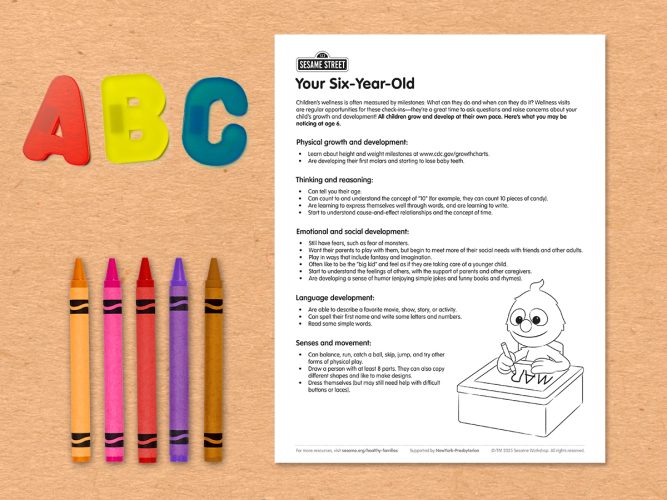
Milestones: Your Six-Year-Old
All children grow and develop at their own pace; use this chart to guide your expectations and observations so you can talk to your child’s pediatrician about questions or concerns.
