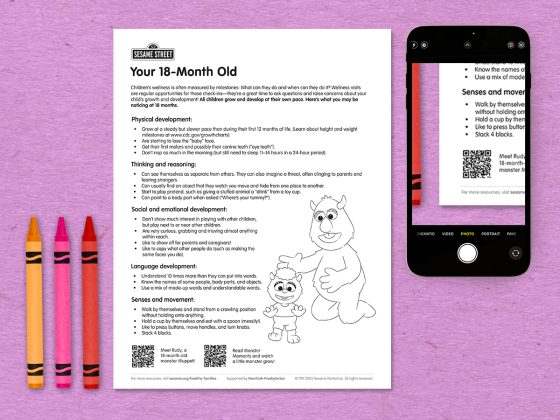
Milestones: Your 18-Month Old
All children grow and develop at their own pace; use this chart to guide your expectations and observations so you can talk to your child’s pediatrician about questions or concerns.
Children’s wellness is often measured by milestones: What can they do, and when can they do it? How are they growing and developing physically, emotionally, and socially? How are their language skills developing?
Regular wellness visits with your child’s pediatrician are great opportunities for these check-ins — they’re the perfect time to ask questions and raise concerns about your child’s growth and development.
It’s good to ask for help as early as you have concerns—you are your child’s first and best advocate! The first three years of life are a period of rapid brain development, so by raising any concerns early, you can make sure your child gets the support they need to thrive. Early intervention may also help prevent or lessen the need for more support later on.
Here’s what you may be noticing at 18 months.
Learn more about developmental milestone checklists here.
Wellness visits are regular opportunities for these check-ins — they’re a great time to ask questions and raise concerns about your child’s growth and development! All children grow and develop at their own pace. Here’s what you may be noticing at 18 months.
Physical development:
- Grow at a steady but slower pace than during their first 12 months of life. (Learn about height and weight milestones at www.cdc.gov/growthcharts)
- Are starting to lose the “baby” face.
- Get their first molars and possibly their canine teeth (“eye teeth”).
- Don’t nap as much in the morning (but still need to sleep 11-14 hours in a 24-hour period).
Thinking and reasoning:
- Can see themselves as separate from others. They can also imagine a threat, often clinging to parents and fearing strangers.
- Can usually find an object that they watch you move and hide from one place to another.
- Start to play pretend, such as giving a stuffed animal a “drink” from a toy cup.
- Can point to a body part when asked (“Where’s your tummy?” ).
Social and emotional development:
- Don’t show much interest in playing with other children, but play next to or near other children.
- Are very curious, grabbing and moving almost anything within reach.
- Like to show off for parents and caregivers!
- Like to copy what other people do (such as making the same faces you do).
Language development:
- Understand 10 times more than they can put into words.
- Know the names of the people, body parts, and objects.
- Use a mix of made-up words and understandable words.
Senses and movement:
- Walk by themselves and stand from a crawling position without holding onto anything.
- Hold a cup by themselves and eat with a spoon (messily!).
- Like to press buttons, move handles, and turn knobs.
- Stack 4 blocks.
Read Monster Moments and watch a little monster grow!
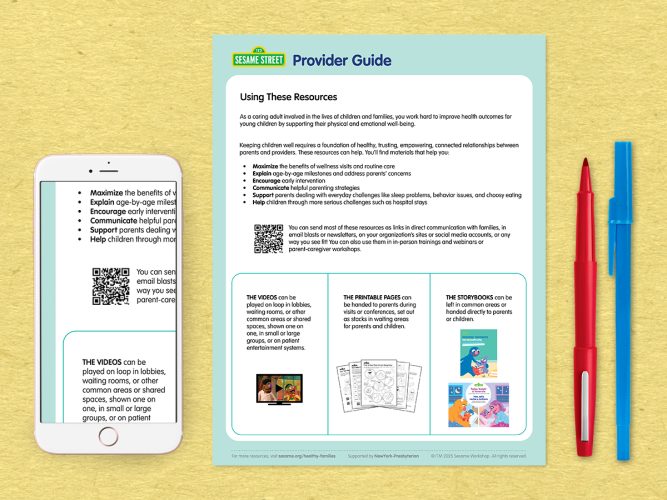
For Providers: Using These Resources
Print and refer to this page as you implement the materials in this initiative.
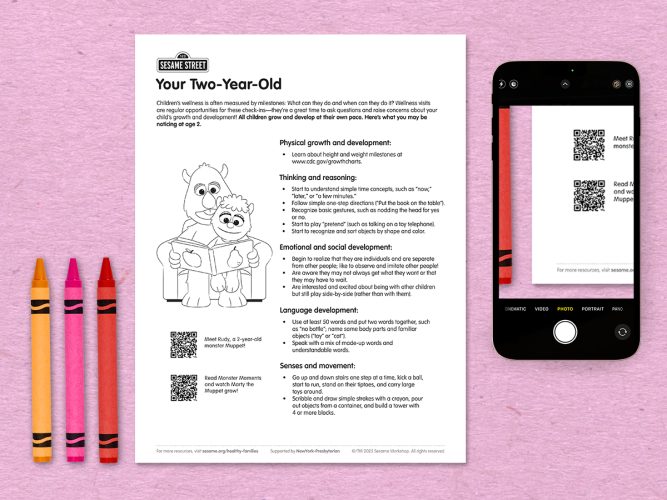
Milestones: Your Two-Year-Old
All children grow and develop at their own pace; use this chart to guide your expectations and observations so you can talk to your child’s pediatrician about questions or concerns.
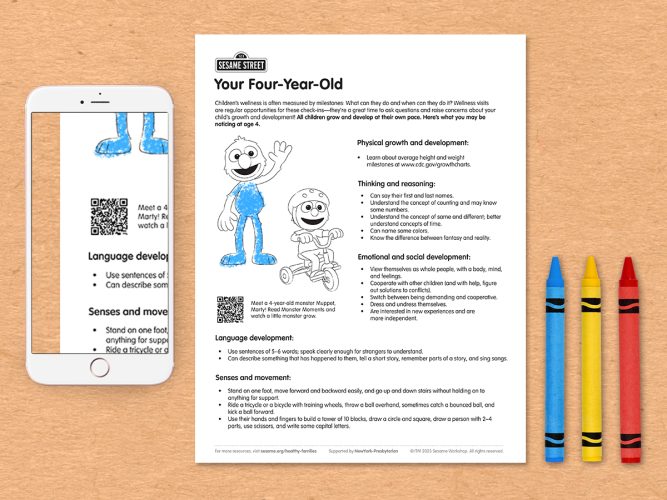
Milestones: Your Four-Year-Old
All children grow and develop at their own pace; use this chart to guide your expectations and observations so you can talk to your child’s pediatrician about questions or concerns.
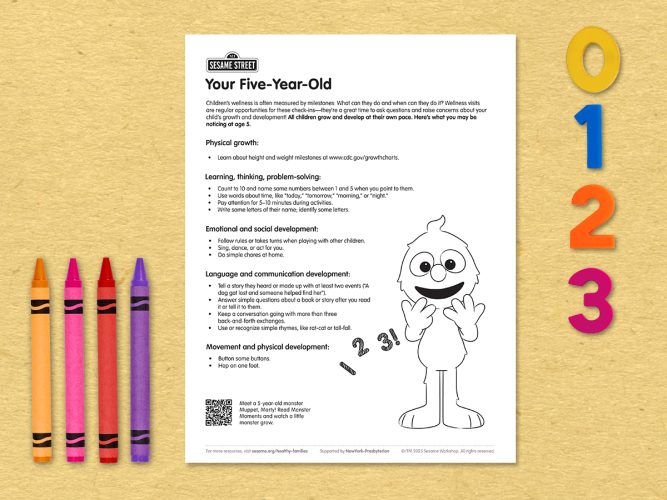
Milestones: Your Five-Year-Old
All children grow and develop at their own pace; use this chart to guide your expectations and observations so you can talk to your child’s pediatrician about questions or concerns.
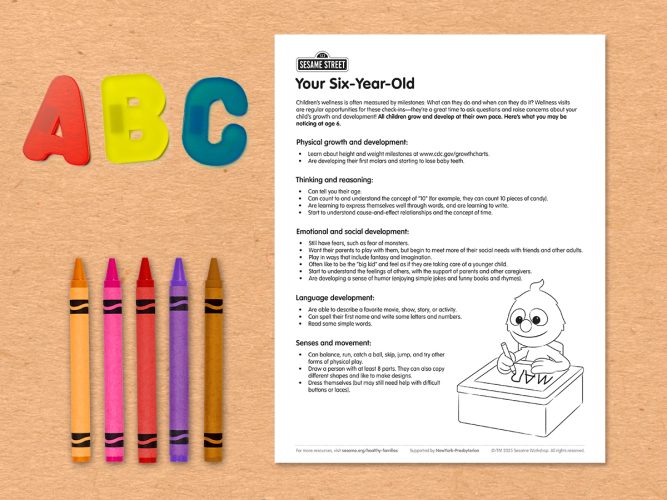
Milestones: Your Six-Year-Old
All children grow and develop at their own pace; use this chart to guide your expectations and observations so you can talk to your child’s pediatrician about questions or concerns.
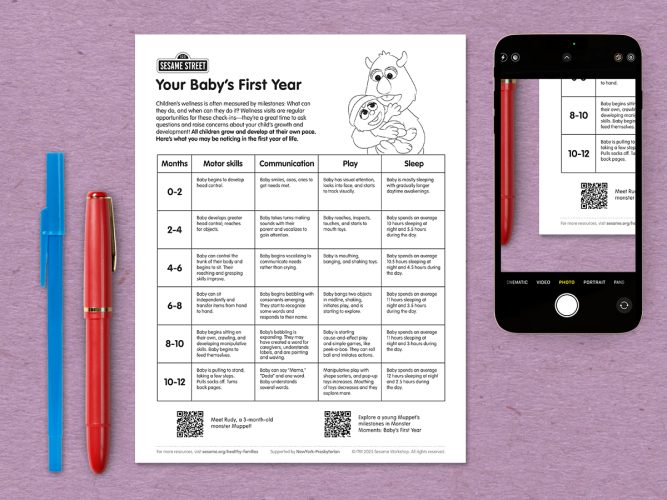
Milestones: Your Baby’s First Year
All children grow and develop at their own pace; use this chart to guide your expectations and observations so you can talk to your child’s pediatrician about questions or concerns.
