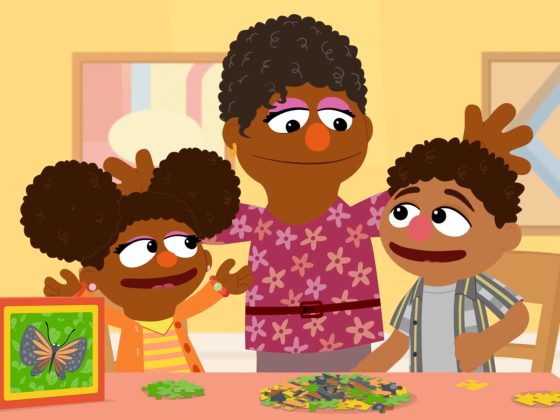
Helped, Heard, or Hugged?
There are so many ways to support a child in distress. You can give children a sense of control by offering three ways you may be able to help… and letting them choose.
When children are in distress, asking them the best way you can offer support can be a powerful strategy: “Do you want me to help you, hear you, or hug you?” After all, we all need different things at different times, and every child is different. Just like Grandma Nell, you can simply ask children what they need:
- Helped: Children may want concrete help solving a problem.
- Heard: Often, children just want to be listened to—to vent or talk through what’s going on.
- Hugged: Children may simply want some physical comfort! (Remind children that if a safe, trusted adult is not around, they can try giving themselves a hug.)
You can also pose this similar question: “Do you want a pal (a friend to sit with you, listen, and be kind), a partner (someone to help you solve a problem), or privacy (some quiet time alone)?”
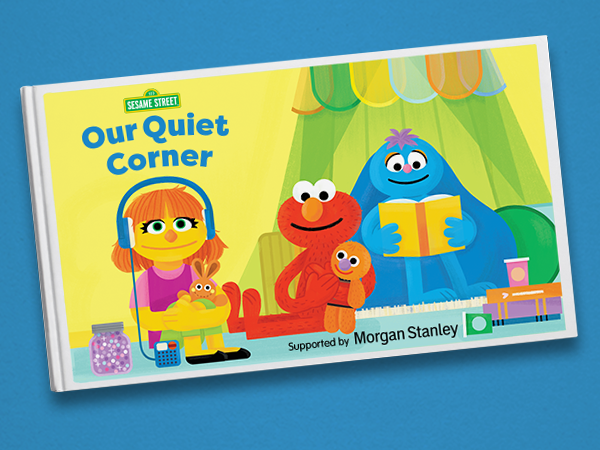
Our Quiet Corner
Sesame friends use a special space to handle big feelings safely.
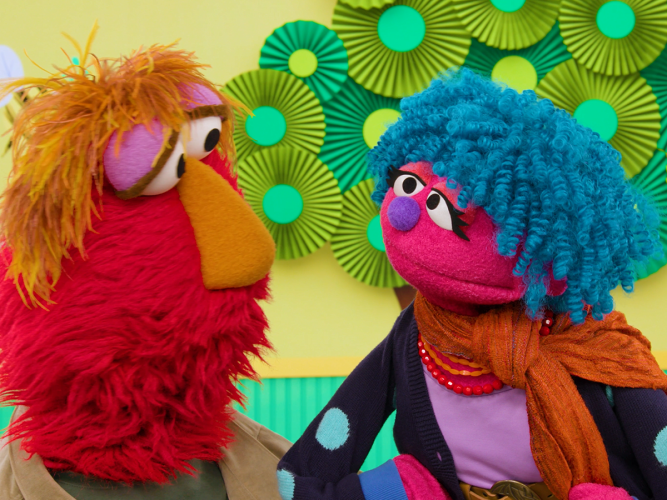
A Time to Talk
Grown-ups work together to help Elmo manage big feelings with care.

It Takes a Village
Honest conversations with all the adults in a child’s circle of care can set everyone up for success!

Adult Teamwork in Children's Tough Moments
When it comes to supporting little ones with big feelings, providers and caregivers work better together!
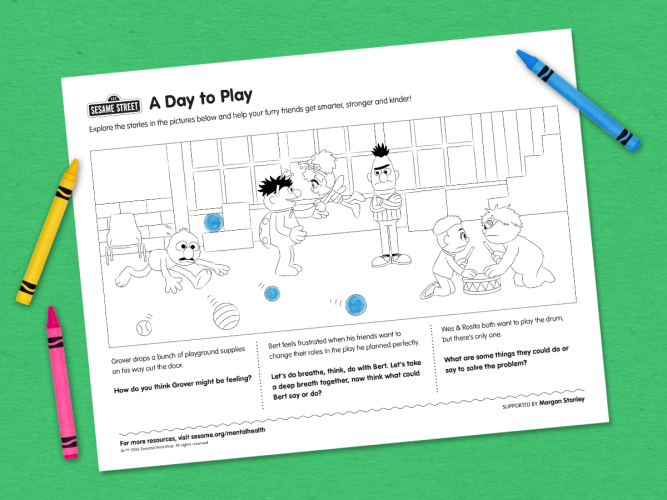
A Day to Play
Color a page of Sesame moments that encourage teamwork and invite reflection!
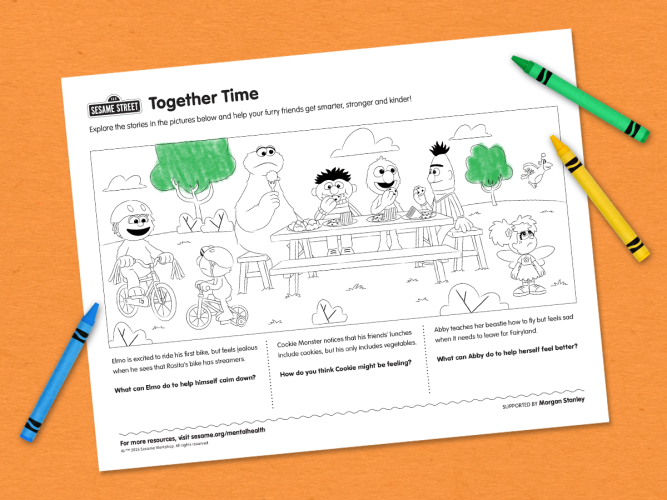
Together Time
Color a page of Sesame moments that encourage teamwork and invite reflection!
Wes Becomes a Perspective Detective
Help children take other’s perspectives.