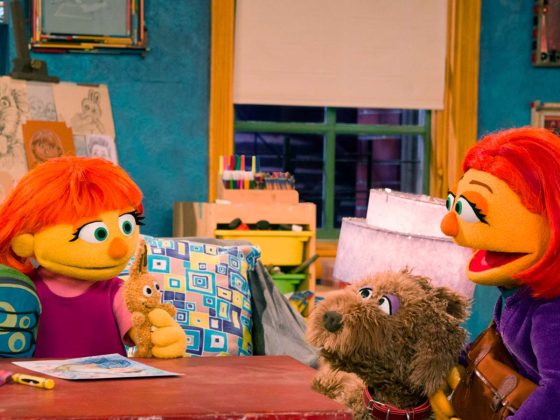
Creature Comforts: Pet Advice for Parents
An article for parents and caregivers about the many ways a pet can be valuable to autistic children.
Children are naturally drawn to animals. Other creatures can arouse their curiosity, soothe and comfort them, and sometimes make them giggle. Animals populate the books, movies, and TV shows they like. The icing on the cake? Studies have long shown that having a pet—particularly a dog—leads to a healthier and less-stressful life for their humans, both young and old. This is even truer for autistic children and their families. Service or therapy dogs can be wonderful friends and helpers to autistic children, of course, but a companion dog can be equally valuable in so many ways. Other pets work, too—whatever kind best fits your lifestyle.
- Pets give unconditional love and friendship, and can be a calming influence, something we all need. Pets don’t judge, don’t ask questions or demand answers, and can be terrific listeners. They also may be irresistibly furry and cuddly!
- Pets may encourage exercise, as well as stepping up and taking on new responsibilities. There are many ways kids can help care for a pet, depending on their age and ability: naming, feeding, filling a water bowl, walking, playing, brushing. In whatever way they are
engaged, it will grow their self-confidence. Children count on grown-ups for daily care. It’s a nice change to switch things around a little by having a creature be dependent on them! - Pets offer opportunities to practice making conversation, by providing easy guideposts for questions and answers with both kids and adults: “What is your dog’s name?” “Can I pet your dog?” “My hamster is called Zippy because he’s really fast.”
- Questions such as, “What does it mean when the dog puts its tail between its legs?” or “Why do you think the kitty is purring?” encourage kids to try to figure out another creature’s needs. When children learn to treat animals gently and with kindness, they begin to stretch their empathy muscles. The confidence they build by interacting with animals may also encourage them to trust and confide in other people.
- It’s important that you choose the right pet—anything from a fish to a dog—with the right temperament for your child. Don’t get a loud pet for a child who likes quiet, for instance. If an actual pet at home isn’t practical, you can still encourage kids to learn from animals. They may enjoy getting to know a classroom pet, for example, observing animals in the neighborhood, reading about animals, and even playing with stuffed animals.
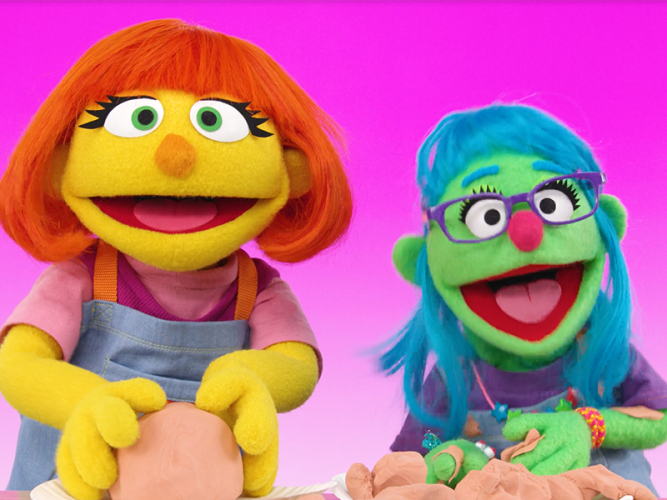
Lots of Ways to Connect
This music video features Julia, Elmo, Ji-Young, and Zoe as they celebrate the many ways friends can connect with each other.
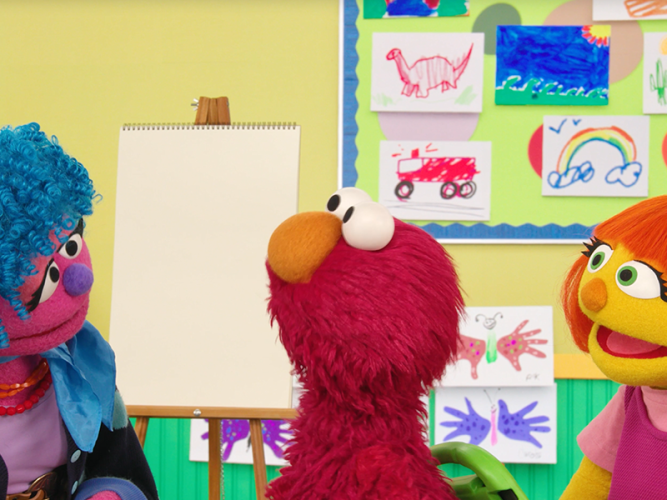
Lots of Ways to Be Kind
Julia and Elmo welcome a new friend to their classroom, each in their own way.
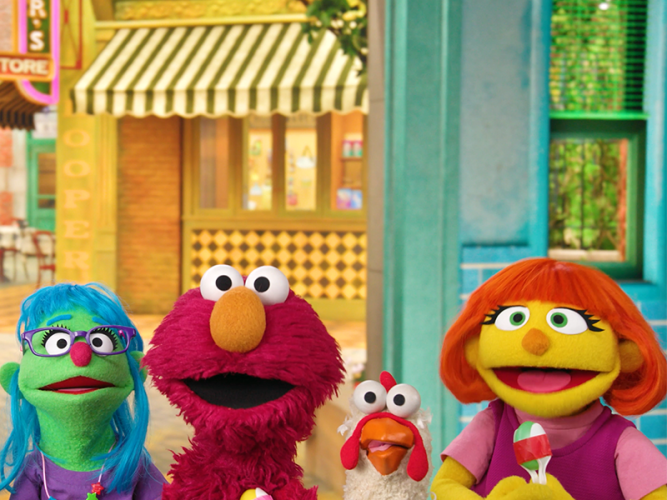
Lots of Ways to Participate
Julia and Elmo participate in story time, each in their own way.

Building Inclusive Spaces: Tips for Supporting Our Neurodivergent Learners
An article to help parents and educators plan for success when designing inclusive activities for autistic and neurotypical children in group settings.
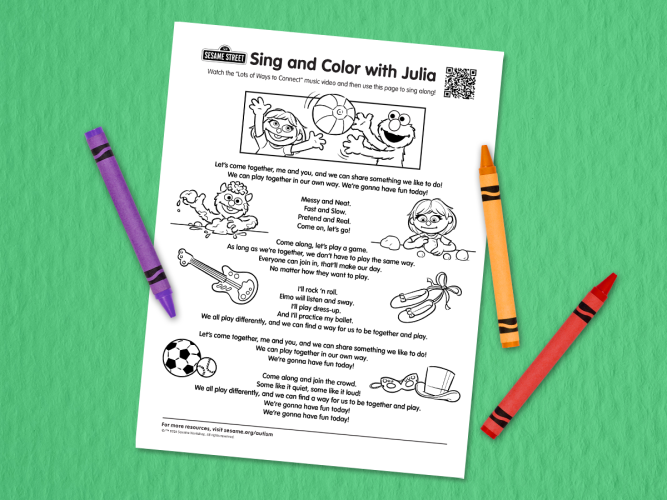
Sing and Color with Julia
Use this page to sing along with Julia and her friends.
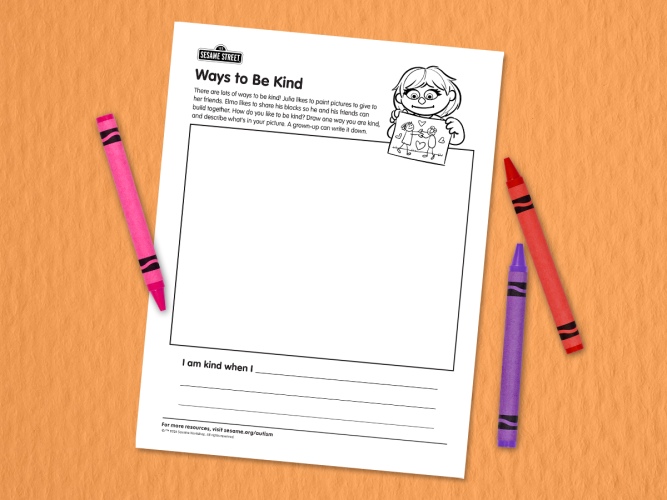
Ways To Be Kind
A drawing activity that celebrates the many ways to be a kind friend.
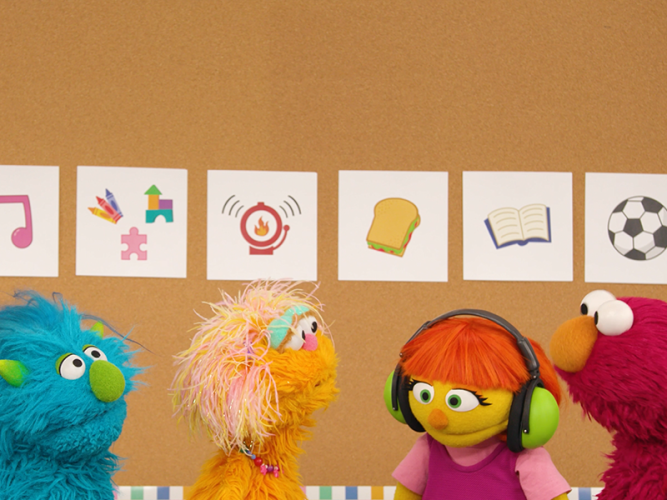
Friends Help Each Other
Elmo helps Julia get ready for a fire drill at school.