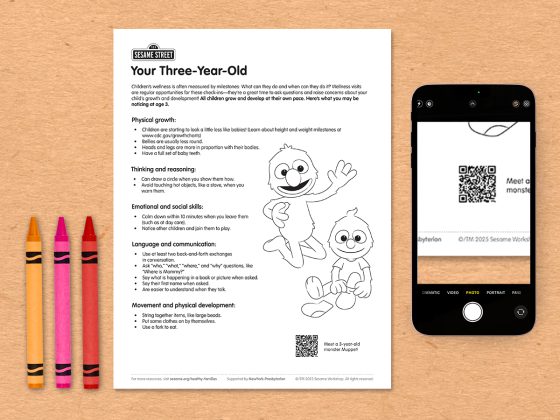
Milestones: Your Three-Year-Old
All children grow and develop at their own pace; use this chart to guide your expectations and observations so you can talk to your child’s pediatrician about questions or concerns.
Children’s wellness is often measured by milestones: What can they do, and when can they do it? How are they growing and developing physically, emotionally, and socially? How are their language skills developing?
Regular wellness visits with your child’s pediatrician are great opportunities for these check-ins — they’re the perfect time to ask questions and raise concerns about your child’s growth and development!.
It’s good to ask for help as early as you have concerns — you are your child’s first and best advocate! The first three years of life are a period of rapid brain development, so by raising any concerns early, you can make sure your child gets the support they need to thrive. Early intervention may also help prevent or lessen the need for more support later on.
Here’s what you may be noticing in the third year of life.
Learn more about developmental milestone checklists here.
Wellness visits are regular opportunities for these check-ins — they’re a great time to ask questions and raise concerns about your child’s growth and development! All children grow and develop at their own pace. Here’s what you may be noticing at age 3.
Physical growth:
- Children are starting to look a little less like babies! (Learn about height and weight milestones at www.cdc.gov/growthcharts)
- Bellies are usually less round.
- Heads and legs are more in proportion with their bodies.
- Have a full set of baby teeth.
Thinking and reasoning:
- Can draw a circle when you show them how.
- Avoid touching hot objects, like stove, when you warn them.
Emotional and social skills:
- Calm down within 10 minutes when you leave them (such as at day care).
- Notice other children and join them to play.
Language and communication:
- Use at least two back-and-forth exchanges in conversation.
- Ask “who,” “what,” “where,” and “why,” questions, like “Where is Mommy?”
- Say what is happening in a book or a picture when asked.
- Say their first name when asked.
- Are easier to understand when they talk.
Movement and physical:
- String together items, like large beads.
- Put some clothes on by themsleves.
- Use a fork to eat.
Meet a 3-year-old monster Muppet!
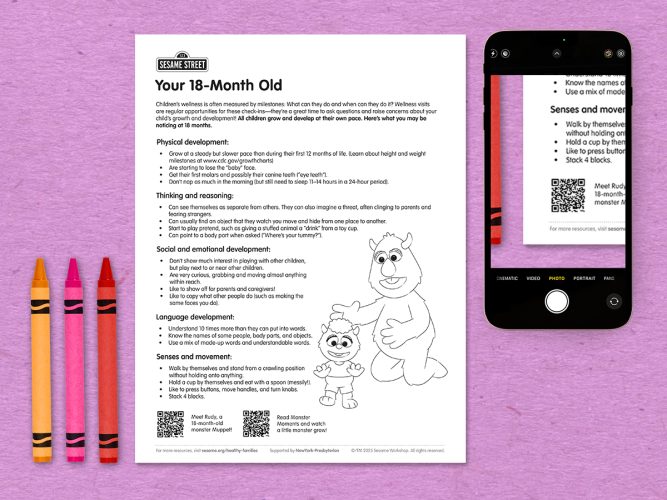
Milestones: Your 18-Month Old
All children grow and develop at their own pace; use this chart to guide your expectations and observations so you can talk to your child’s pediatrician about questions or concerns.
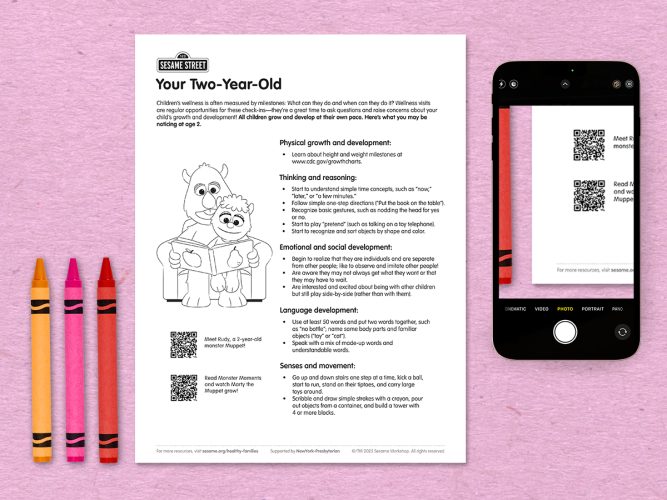
Milestones: Your Two-Year-Old
All children grow and develop at their own pace; use this chart to guide your expectations and observations so you can talk to your child’s pediatrician about questions or concerns.
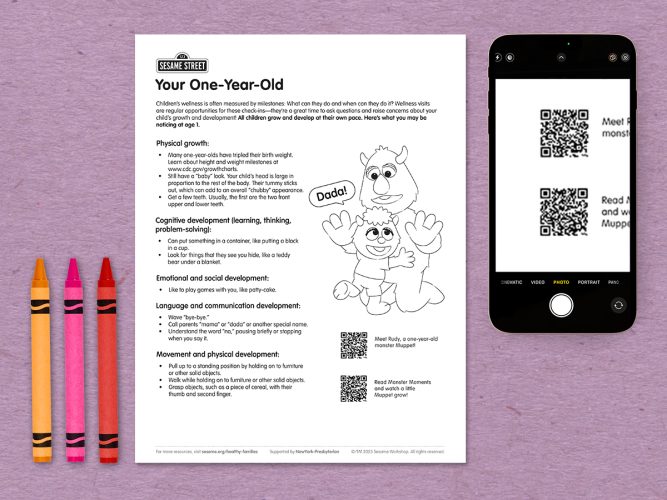
Milestones: Your One-Year-Old
All children grow and develop at their own pace; use this chart to guide your expectations and observations so you can talk to your child’s pediatrician about questions or concerns.
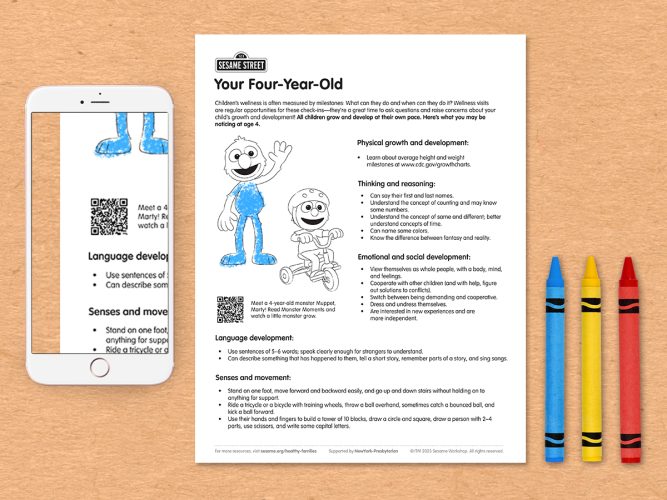
Milestones: Your Four-Year-Old
All children grow and develop at their own pace; use this chart to guide your expectations and observations so you can talk to your child’s pediatrician about questions or concerns.
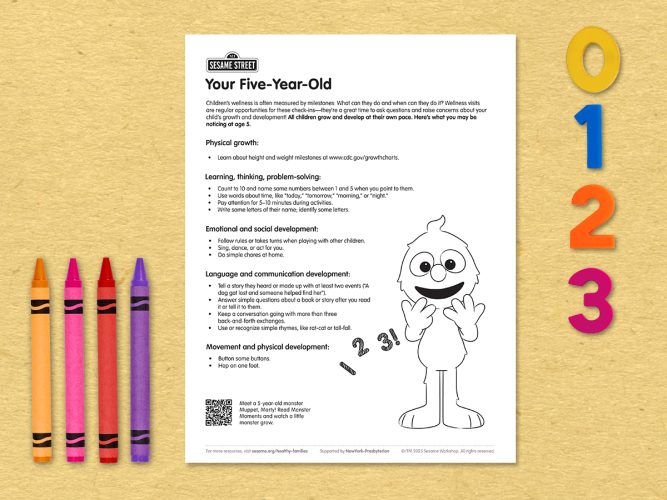
Milestones: Your Five-Year-Old
All children grow and develop at their own pace; use this chart to guide your expectations and observations so you can talk to your child’s pediatrician about questions or concerns.
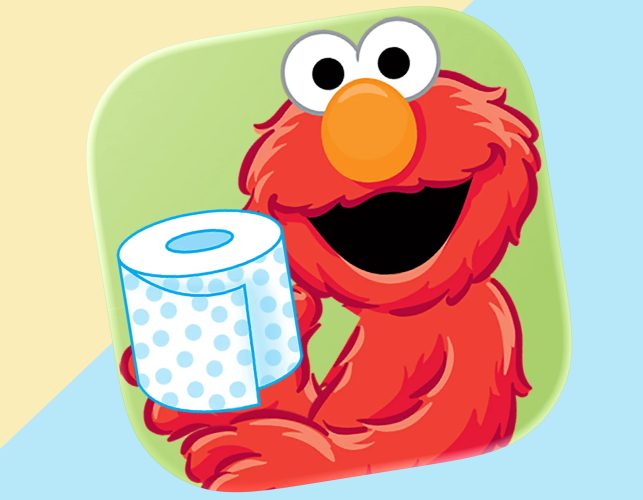
Potty Time with Elmo
Elmo reads this animated storybook in an app filled with games, songs, stickers and potty progress chart that all help ease your child through toilet training.