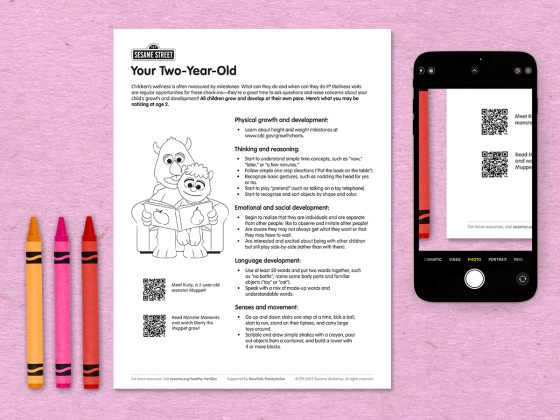
Milestones: Your Two-Year-Old
All children grow and develop at their own pace; use this chart to guide your expectations and observations so you can talk to your child’s pediatrician about questions or concerns.
Children’s wellness is often measured by milestones: What can they do, and when can they do it? How are they growing and developing physically, emotionally, and socially? How are their language skills developing?
Regular wellness visits with your child’s pediatrician are great opportunities for these check-ins — they’re the perfect time to ask questions and raise concerns about your child’s growth and development.
It’s good to ask for help as early as you have concerns — you are your child’s first and best advocate! The first three years of life are a period of rapid brain development, so by raising any concerns early, you can make sure your child gets the support they need to thrive. Early intervention may also help prevent or lessen the need for more support later on.
Here’s what you may be noticing in the second year of life.
Learn more about developmental milestone checklists here.
Wellness visits are regular opportunities for these check-ins–they’re a great time to ask questions and raise concerns about your child’s growth and development! All children grow and develop at their own pace. Here’s what you may be noticing at age 2.
Physical growth and development:
- Learn about height and weight milestones at www.cdc.gov/growthcharts.
Thinking and reasoning:
- Start to understand simple time concepts, such as “now,” “later,” or “a few minutes.”
- Follow simple one-step directions (“Put the book on the table”).
- Recognize basic gestures, such as nodding the head for yes or no.
- Start to play “pretend” (such as talking on a toy telephone).
- Start to recognize and sort objects by shape and color.
Emotional and social development:
- Begin to realize that they are individuals and are separate from other people; like to observe and imitate other people!
- Are aware they may not always get they want or that they may have to wait.
- Are interested and excited about being with other children but still play side-by-side (rather than with them).
Language development:
- Use at least 50 words and put two words together, such as “no bottle”; name some body parts and familiar objects (“toy” or “cat”).
- Speak with a mix of made-up words and understandable words.
Senses and movement:
- Go up and down one step at a time, kick a ball, start to run, stand on their toes, and carry large toys around.
- Scribble and draw simple strokes with a crayon, pour out objects from a container, and build a tower with 4 or more blocks.
Keep the learning going:
Meet Rudy, a 2-year-old monster Muppet!
Read Monster Moments and watch Marty the Muppet grow!
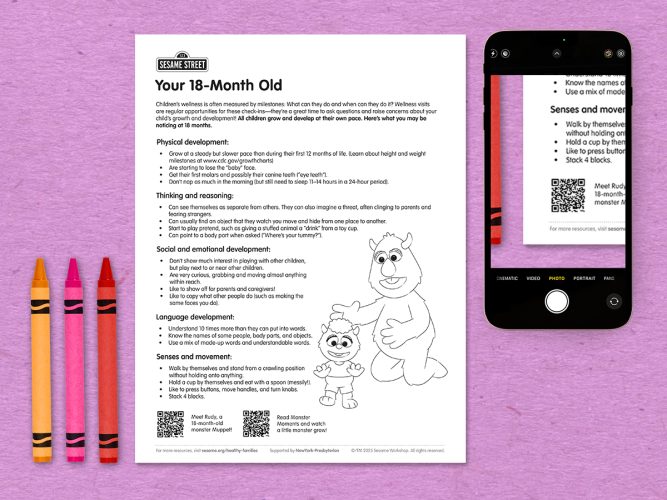
Milestones: Your 18-Month Old
All children grow and develop at their own pace; use this chart to guide your expectations and observations so you can talk to your child’s pediatrician about questions or concerns.
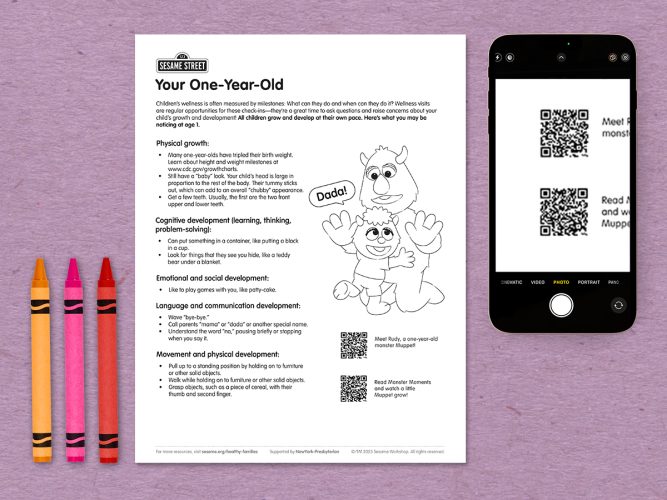
Milestones: Your One-Year-Old
All children grow and develop at their own pace; use this chart to guide your expectations and observations so you can talk to your child’s pediatrician about questions or concerns.
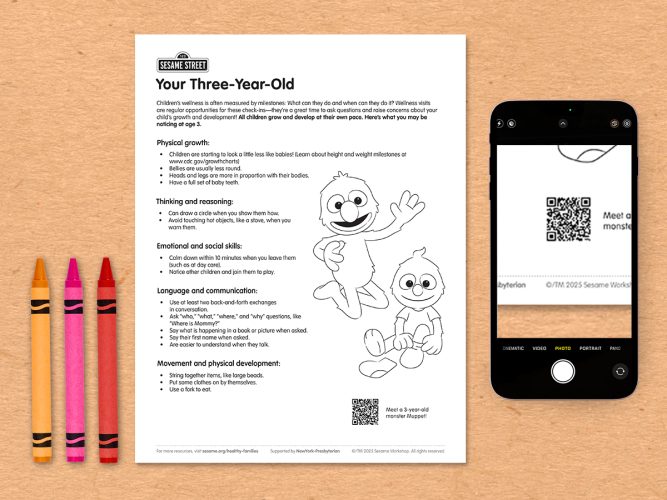
Milestones: Your Three-Year-Old
All children grow and develop at their own pace; use this chart to guide your expectations and observations so you can talk to your child’s pediatrician about questions or concerns.
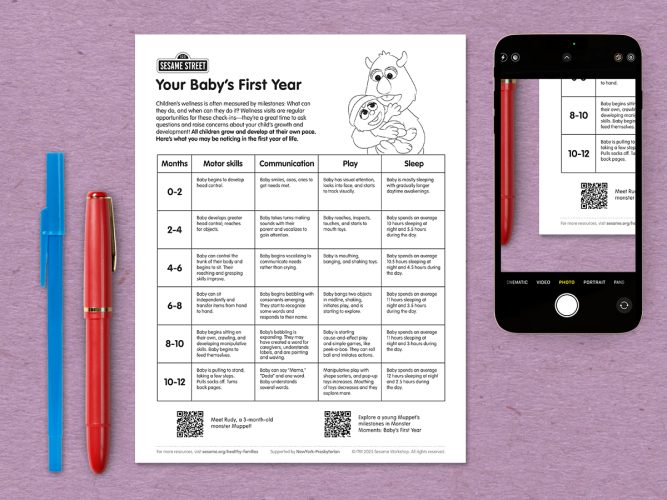
Milestones: Your Baby’s First Year
All children grow and develop at their own pace; use this chart to guide your expectations and observations so you can talk to your child’s pediatrician about questions or concerns.
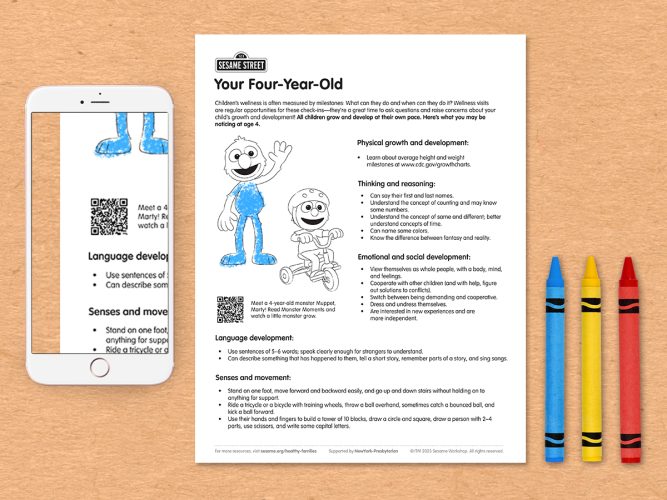
Milestones: Your Four-Year-Old
All children grow and develop at their own pace; use this chart to guide your expectations and observations so you can talk to your child’s pediatrician about questions or concerns.
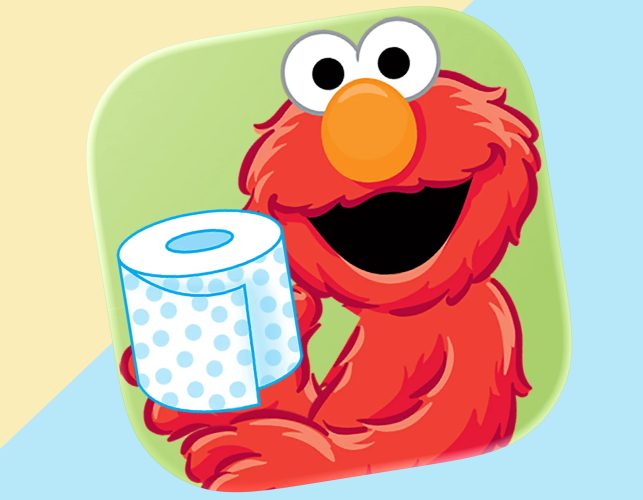
Potty Time with Elmo
Elmo reads this animated storybook in an app filled with games, songs, stickers and potty progress chart that all help ease your child through toilet training.