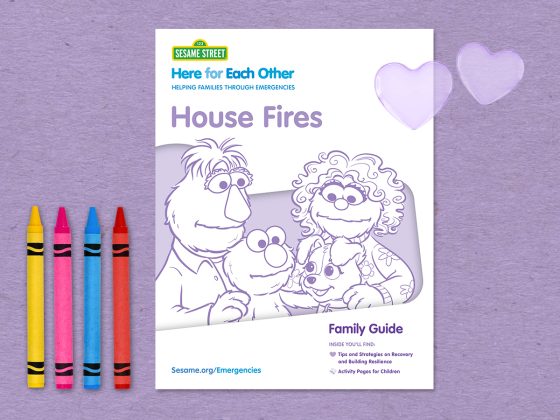
Here for Each Other: House Fires
Comforting children after a house fire.
A house fire can be traumatic for the whole family, but your love and support go a long way toward helping your child feel safe. Remember that even small acts of care and connection, like reading a story together, can make a big difference. Explore these interactive parent-child pages for:
- Child-friendly explanations about what happened
- Soothing activities and tips to help children work through big feelings
- Self-care strategies for grown-ups
- Information about the special helpers in your community
Preview the guide below:
You have each other. A house fire can be a devastating event for the whole family. Even after everyone is safe, recovery (both emotionally and physically) can be a long process, especially for little ones. The good news is, your love and support can help your child overcome obstacles.
This guide offers simple ways to comfort and support your child after a fire—through playing, talking, and spending time together. And remember, you are not alone. We’re here for each other!
SAFETY FIRST
» Avoid touching anything with soot or ash.
» Do not go back inside until firefighters or inspectors say it’s safe.
» Use bottled or clean water if your water smells or looks different.
» Throw out any food, medicine, or toys touched by smoke, fire, or water.
» Keep in touch with family, friends, and neighbors to let them know you’re safe.
Questions and Answers
Your child may have questions. Let them ask at their own pace and try to answer them honestly and calmly.
 What Happened?
There was a fire in our home (or neighborhood). It happened quickly, and it was scary, but now it’s over. We’re safe, and I’m here with you.
Will We Be Okay?
Yes, we will be okay. Helpers like firefighters, safety inspectors, and neighbors are taking care of people in our community.
Why Did This Happen? Did We Do Something Bad?
Fires start in many different ways. It’s not your fault. Accidents happen sometimes, but the important thing is that we are safe now.
Who Will Take Care of Me?
I will take care of you. I’ll do everything I can to make sure you have what you need. And there are lots of other people who can help too.
When Can We Go Home?
We have to wait until the helpers tell us it’s safe to go home. We might not know for sure yet, but what I do know is that we are still a family and that home is wherever we are together. If your family lost your home, you might say, “We can’t go back to our house. It makes us all feel sad. No matter where we are, we are still a family. Home is wherever we are together.”
There are questions you may not have an answer to. It’s okay to be honest and say, “I don’t know. But what I do know is that I love you and I’m going to keep you safe.”
Comfort and Reassurance
Your caring and supportive presence goes a long way in helping your child feel safe and secure, even when dealing with the challenges and uncertainty.
 Provide Comfort
Assure your child that they are safe and loved. Let them know you are there to take care of them no matter what. Hold hands and snuggle often. After smelling smoke from a fire, it can be particularly comforting for children to snuggle items that smell good, like a freshly laundered shirt, or a lovey sprayed with a bit of perfume or essential oil.
 Model Healthy Ways of Coping
After a fire, children look to the adults around them to see how they should feel and react. As much as possible, try to stay calm, and encourage children to talk about their feelings. Make space for your own need to cope and process by talking to a trusted friend or family member.
 Try to Keep One Routine
There is comfort in the familiar. Finding a few activities that your child can look forward to each day can give them a sense of control even if there are changes to your daily life. Simple routines like bedtime stories or snack time can help your child feel safe.
Create a Safety Net
Simply seeing or overhearing something that reminds your child of the fire can trigger feelings of fear or sadness. After a fire, children may be particularly sensitive to the sound of sirens or alarms, or the smell of smoke. As much as possible, try to surround them with positive conversations and activities to help build back their sense of safety.
Watch and Listen
It’s normal for children to feel worried or act differently after a fire. If these changes last a long time or make daily life hard, your child may need some extra help.
Looking for Signs of Stress
If you observe unusual clinging or fear of being alone…
» try to use gentle words and reassure them you’ll keep them safe. Offer a comfort item like a lovey or blanket. If they are fearful of separating, remind them that you always come back and let them know when you will return.
If you observe fear that the fire will happen again…
» try to keep your child away from reminders of the fire. Remind them that it’s over and that they are safe with you.
If you observe fear around reminders of the fire like sirens, alarms, or the smell of smoke…
» try to let children know that you understand why reminders of the fire might feel scary, and gently reassure them that they are safe with you.
If you observe trouble sleeping…
» try to keep a consistent bedtime routine to provide comfort. Read a favorite story or sing a favorite song each night. Doing a head-to-toe “body scan,” in which children take a deep breath and notice how each part of their body feels from head to toe can be a good way to help children feel calmer.
If you observe your child is less open, verbal, or otherwise withdrawn…
» try to ask how they’re feeling and provide an opportunity for discussion or for them to ask questions. (I see you’re crying, it seems like you’re feeling sad. I feel sad sometimes too. Do you want to tell me more about how you are feeling?) Offer other ways for them to express themselves such as drawing or engaging in pretend play.
If you observe more frequent outbursts and meltdowns…
» try to describe their feelings with words, such as angry, sad, scared, or worried. Provide an outlet like jumping, walking, or play that engages children’s senses, like feeling different textures or “drawing out” their feelings.
If you observe more or a return to wetting the bed, thumb-sucking, or baby talk…
» try to offer more love and affection. These are common behaviors after a stressful event and will likely fade with time and support.
Big Feelings
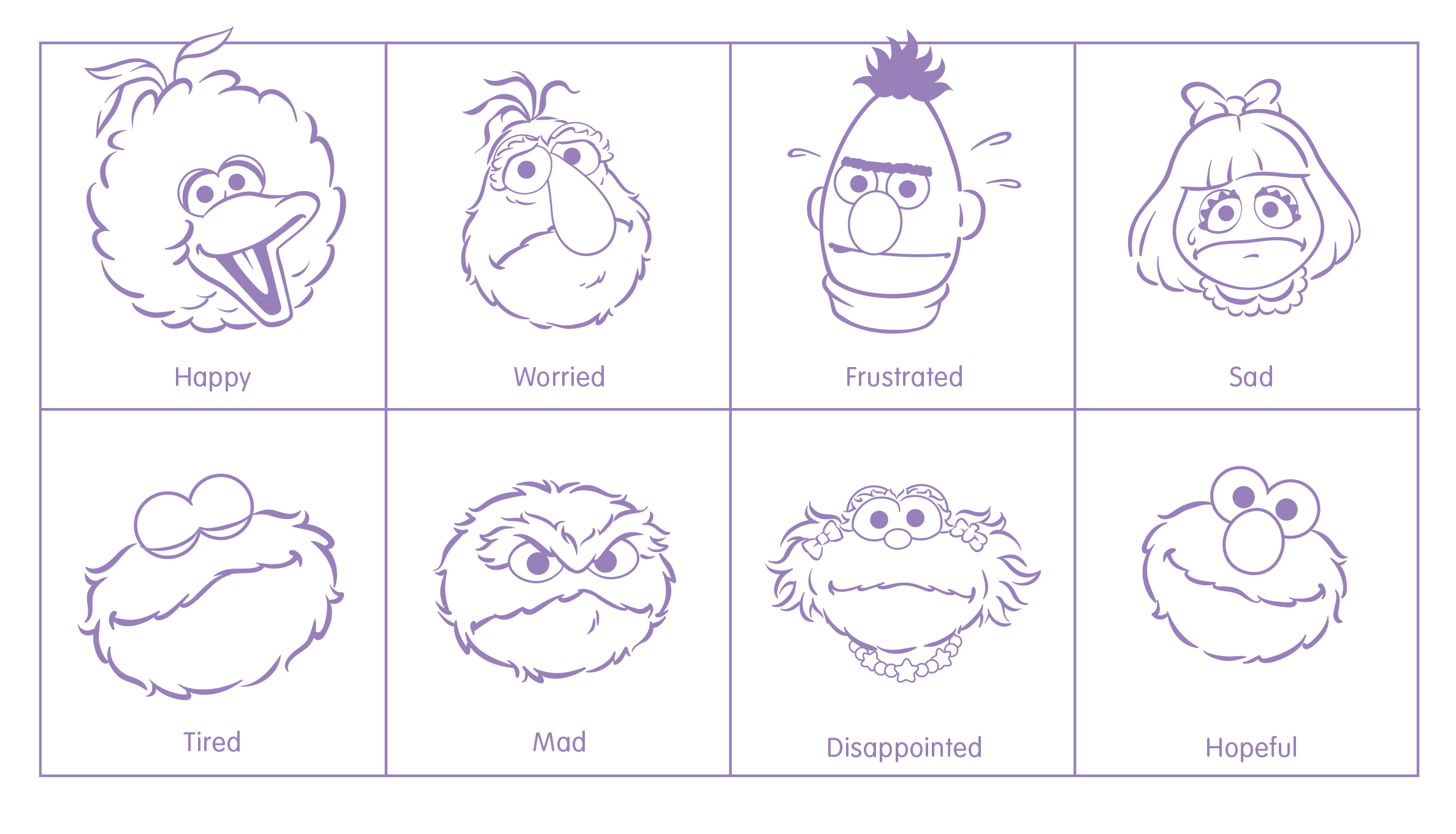
After a fire, children may have some big feelings that come and go in waves. You can help by giving your child words to name their feelings and by asking questions that encourage them to open up. A good place to start is by noticing children’s behavior (“I see you are a little quieter today”) or asking children where they are feeling something in their body (“where do you feel your nervous feeling in your body?”). Let them know that we all have big feelings and that it’s okay to talk about them.

How Do You Feel?
Show your children these “feelings faces” and ask them to point to one that matches how they’re feeling. You might say, “I see you’re pointing to the worried face. I understand why you might feel worried. Can you tell me more about it?” (Encourage them to work through their worried feelings by moving or drawing. This gives children different ways to share their thoughts and feelings with you, even if it’s without words.)
We Have Each Other
Even in stressful times, there are opportunities to connect as a family. In quiet moments, you might spend some time coloring this page with children. Remind them, “No matter what, we always have each other.”
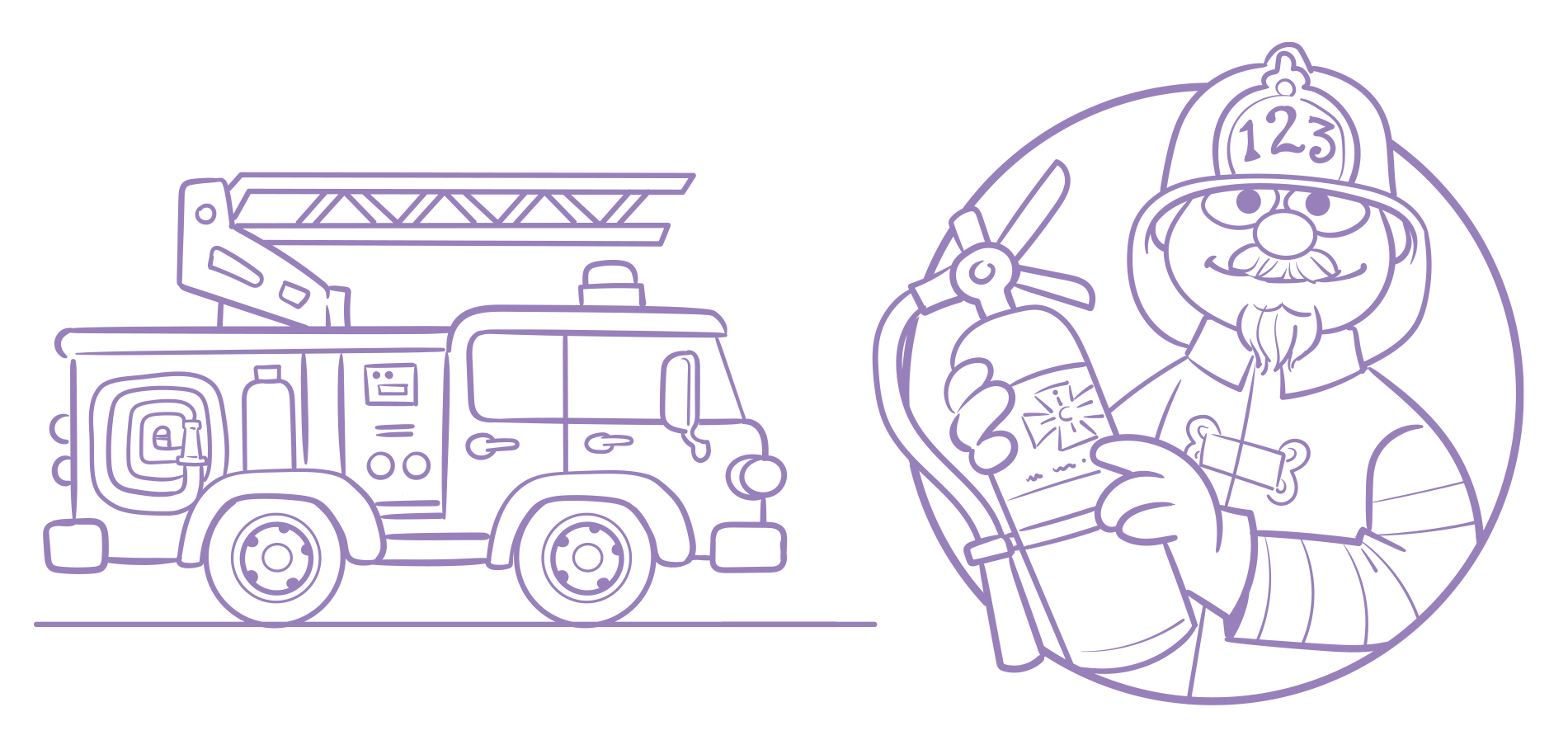
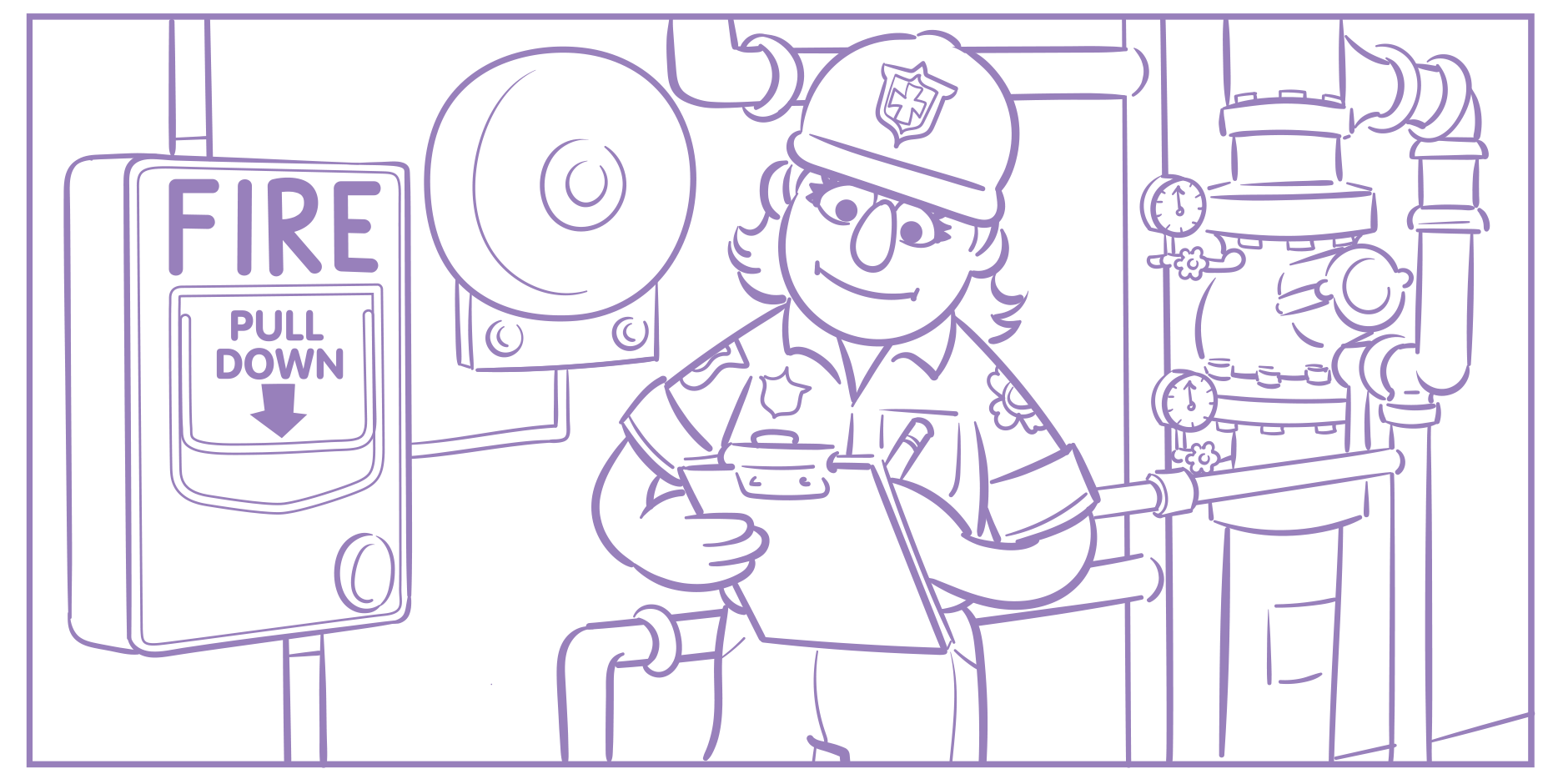
Look for Helpers!
After a fire, it can be reassuring to know that there are many people working to make things better. Let children know that there are helpers all around. You might see:
» Firefighters
» Fire inspectors
» Emergency responders
» Utility crews
» Line workers
» Plumbers and electricians
» Shelter workers
» Doctors and nurses
» Neighbors helping neighbors
Take Care of Yourself
After a fire, you may be dealing with insurance, cleaning, or replacing things. It’s normal to feel stressed, tired, or overwhelmed. When you care for yourself, you can better comfort and protect children—and little ones learn lifetime lessons by watching their parents take care of themselves and build their own resilience. Try to do something that helps you feel a little better each day.
Breathe
Close your eyes and put your hands on your belly. Take a slow, deep breath in through your nose and slowly out through your mouth. You might also slowly raise and lower your arms as you breathe.
Relax
To relieve muscle tension, roll your neck and shoulders or make big arm circles.
Stay Active
Even five minutes of stretching can help your body feel more relaxed and cared for. Remember to take care of your body in simple ways like eating and drinking water.
Connect
Reach out to someone you trust and can talk to—a relative, friend, faith leader, or counselor. Even a few minutes of rest, laughter, or connection helps rebuild strength. You are not alone.
Imagine
Close your eyes, take slow, deep breaths and picture a situation or place that feels peaceful. Sing or listen to a favorite song. “Dig deep” for the best, strongest parts of yourself. This will help keep you steadier and remind you that you can keep it together for your little ones.
Show
Let your children see you take care of yourself—it helps them learn how to care for themselves too!
 Story: Safe and Cozy
Elmo was playing in the living room when he smelled something strange.
Elmo’s daddy said, “There’s a small fire in the kitchen. We need to go outside right away.”
Elmo held his parents’ hands tightly as they left. Outside, Elmo saw flashing lights and firefighters hurrying in. The fire didn’t last long, but the house was filled with smoke, and some things were wet from the water used to put out the flames. That night, Elmo and his family stayed at his auntie’s house. “Elmo misses his cozy room, and cozy blanket, and cozy house.” Elmo told his mommy.
“I know, Elmo,” said his mommy. “I do too. We have to wait for the smelly smoke to clear out of our apartment. The helpers will let us know when we can go back. For now, let’s think of some ways we can make tonight cozy.”
Elmo’s auntie brought in a warm cup of hot cocoa as a special treat for Elmo.
“Yummy!” Elmo said.
Elmo’s mommy brought out a soft pair of pajamas from the laundry for Elmo. They were still warm from the dryer and didn’t smell like smoke. Elmo put them to his cheek and felt the soft fabric.
“Soft and fuzzy!” Elmo said.
Elmo’s daddy brought in a blanket and a book of stories.
“Cozy!” Elmo said. Mommy, Daddy, and Elmo all snuggled under the blanket together and read stories until it was time for bed.
“Elmo was sad to leave his home but Elmo is glad we’re together,” said Elmo.
“Safe and cozy!” said Mommy.
Our Favorite Things
All the Sesame Street friends have a favorite toy or animal friend that helps them feel better when they are scared or sad. Have your child choose one of these cards to hold when they need a Sesame Street friend to help them feel better.
Memory Game Instructions
- Play with a friend. Cut apart these cards and lay them face down in a big square shape.
- Take turns flipping over cards, two at a time. If the cards match, keep them and take another turn. If the cards do not match, turn them back over in their places and try to remember the cards you’ve seen so you can find matches in the next turn. Let your friend take a turn.
- Play until all the cards have been matched.

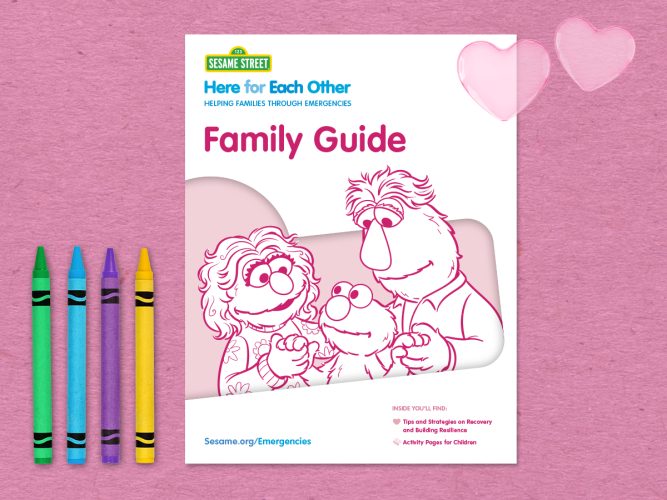
Here for Each Other: Family Guide
An interactive guide to help families recover from emergencies.
How to Keep Children Cool in a Heat Wave
Tips on keeping children safe when temperatures rise.

Ideas for Poor Air Quality Days
An article with tips on how to prepare for poor air quality days.
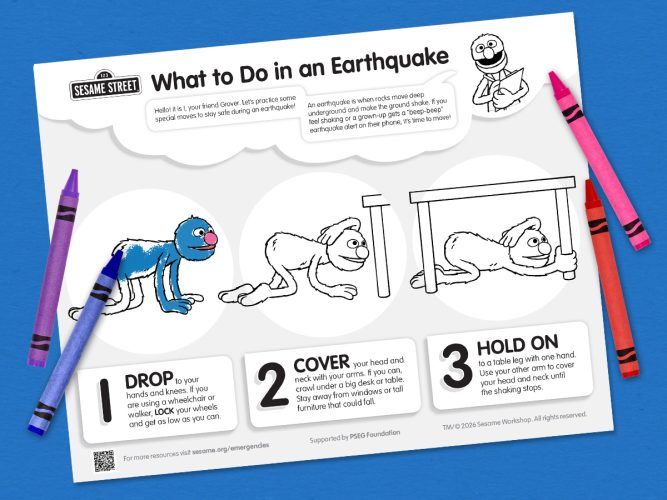
What to Do in an Earthquake for Children |Drop, Cover, Hold On
A safety poster to help children learn how to stay safe in an earthquake.

Adjusting to a New Normal
A message of care for those dealing with the long-term effects of an emergency.

You’re Doing Amazing
A message from Sesame Street for caregivers recovering from an emergency.
Earthquake Safety for Children
An article about steps your family can take to prepare for an earthquake.