Visual Schedules for Children
A tool to help prepare children for what to expect during the day ahead.
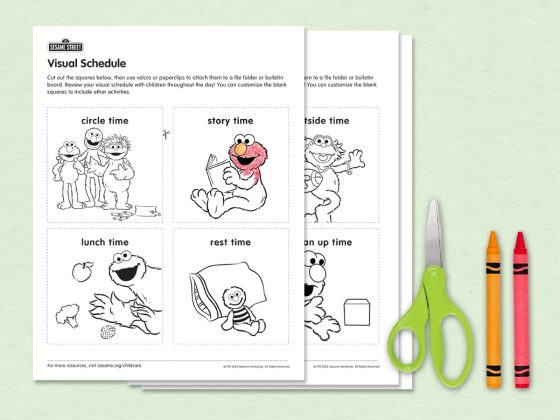
Children thrive when they have structure and predictability. Knowing what’s coming up can help kids feel a sense of control and help them regulate themselves — and special routines can give them something to look forward to! By using concrete tools like a visual schedule, you can help children build confidence and know what to expect in their day ahead.
On the first two pages of this printable, you’ll find premade squares with routines and activities for a typical day. Cut out the squares and attach them to a file folder or bulletin board with Velcro. Use the blank squares to include your own customized activities. Start each day by reviewing your schedule together with children! Post it in a place where children can see it and look back on it as a reminder throughout the day.
For Providers: Using These Resources
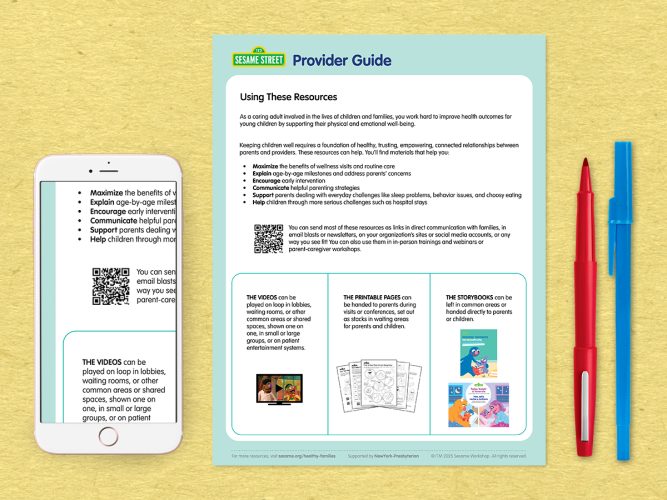
Print and refer to this page as you implement the materials in this initiative.

The Power of Following Children’s Lead
Joining children in their play offers so many opportunities to encourage, communicate, bond, spark and share joy, teach, show warmth and kindness, and help them thrive.

Watch and Play: Abby's Magical Beasties
Watch this episode and explore ways to extend the learning at home.

Parenting Moment: Describing
The way you talk with children matters! Your words have power.

Parenting Moment: Imitating
Playing is learning! The way you play with children matters… your actions and words have power.
Parenting Moment: Reflecting
The way you talk with children matters… your words have power!

Parenting Moment: Enjoying!
Showing you enjoy your time together with your child builds your special bond. And when you’re being positive, your little one is more likely to do the same.
