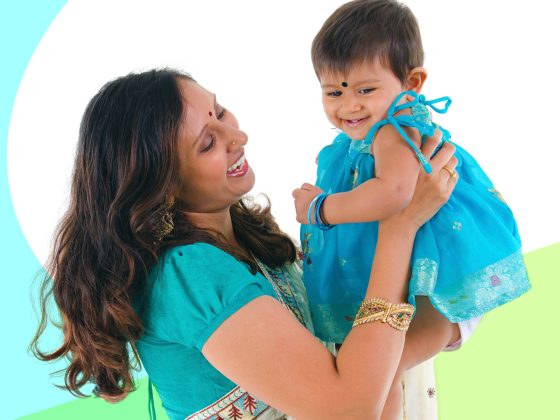
The Littlest Players
Even very little ones are ready to play. Read how children learn through play.
It may seem like babies do nothing but eat, sleep, cry, and repeat the cycle again! But babies actually spend large parts of their day trying to play, and love any opportunity to engage with you. Here are some great ways to play with babies to help them learn and develop from the very beginning:
- Peek-a-boo: At five months, babies will really start to “get” this game! This timeless activity helps babies learn that things they can’t see still exist (a key part of memory). Cover your face with your hands and then open them to let baby see you’re still there! Or, cover baby’s eyes gently and briefly with a soft cloth or piece of clothing, and then take it away. Peek-a-boo!
- Rattles and Shakers: Holding up a rattle and shaking it in baby’s range of sight (10–12 inches away) can help little ones to focus their attention. As baby grows, play
with rattles can turn into musical play, and eventually, as grip improves, baby will be able to hold and shake rattles, too! - Silly Sounds: Sounds that may be commonplace to you, like sneezing, can be very funny to a baby! Pretending to sneeze or cough, clapping, or clucking your tongue, will not only get some giggles, it will also help them tune in to sounds around them, and make them aware they can make sounds, too.
- Walk and Talk: Babies are curious about everything around them, and they begin absorbing language as soon as they are born. Take baby out for a stroll and point out the people, places, and things around you to introduce new words.
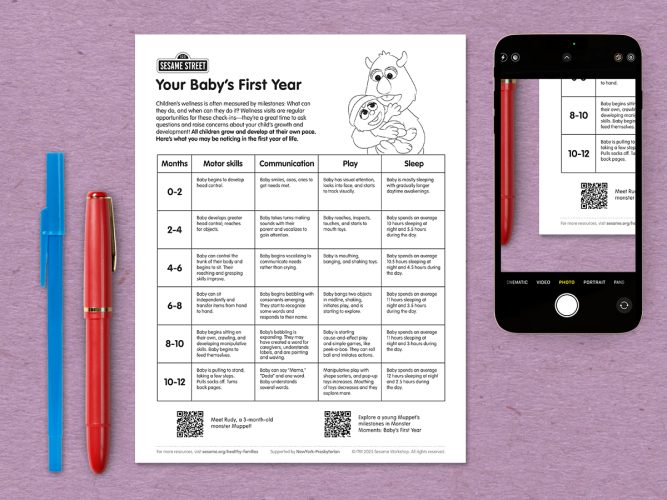
Milestones: Your Baby’s First Year
All children grow and develop at their own pace; use this chart to guide your expectations and observations so you can talk to your child’s pediatrician about questions or concerns.
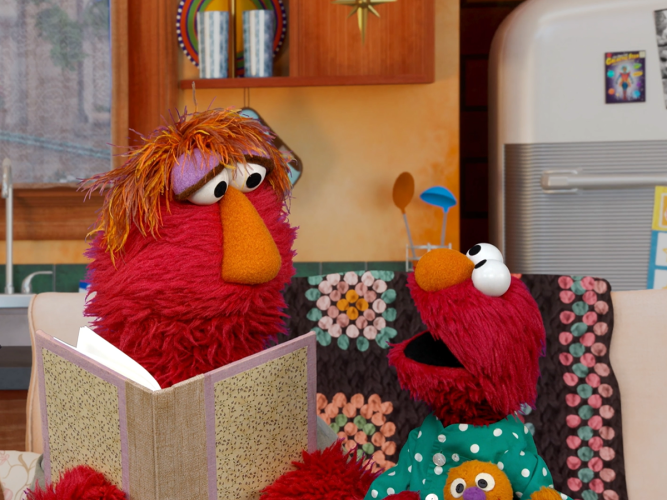
Go To Sleep, Elmo!
Handling a middle-of-the-night monster moment.
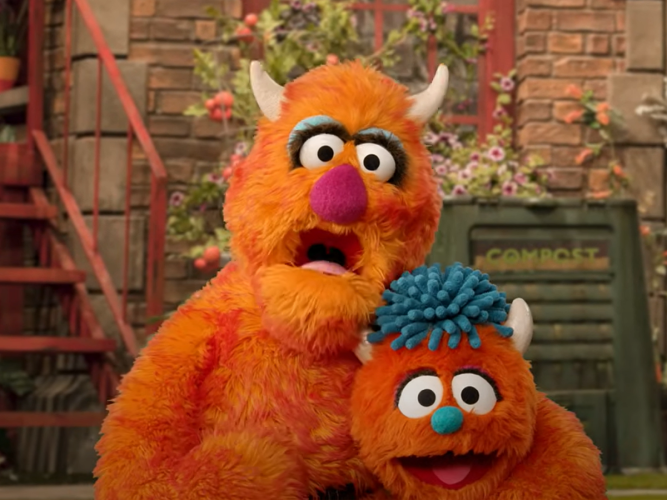
Monster Meltdown
Meltdowns happen… but they are somewhat predictable! As you try to handle them, curiosity and patience go a long way.
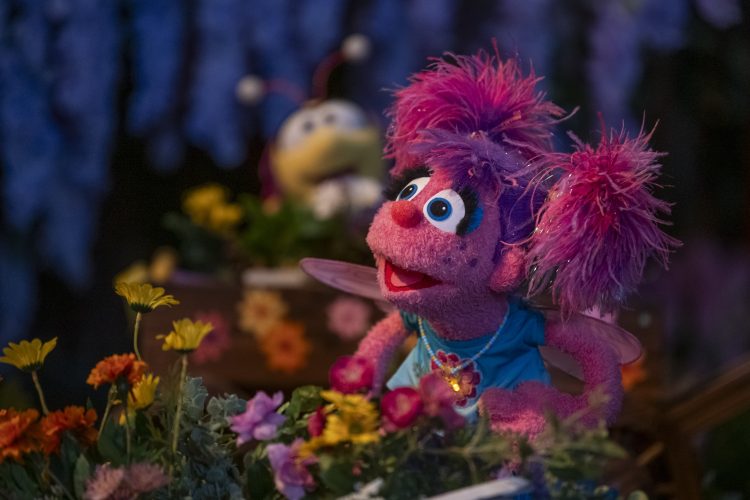
Watch and Play: Abby's Magical Beasties
Watch this episode and explore ways to extend the learning at home.
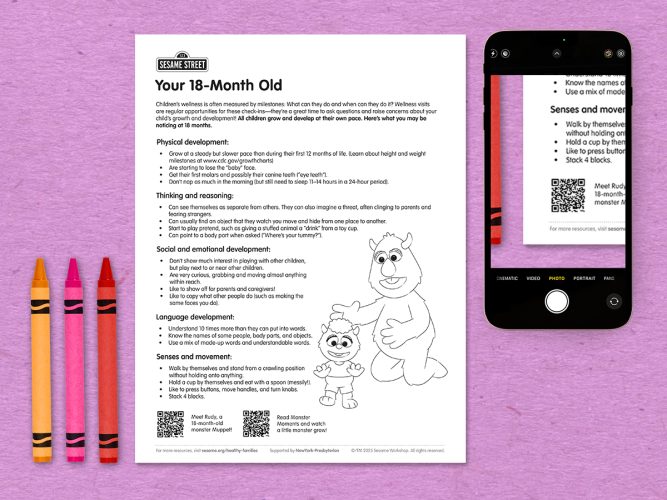
Milestones: Your 18-Month Old
All children grow and develop at their own pace; use this chart to guide your expectations and observations so you can talk to your child’s pediatrician about questions or concerns.
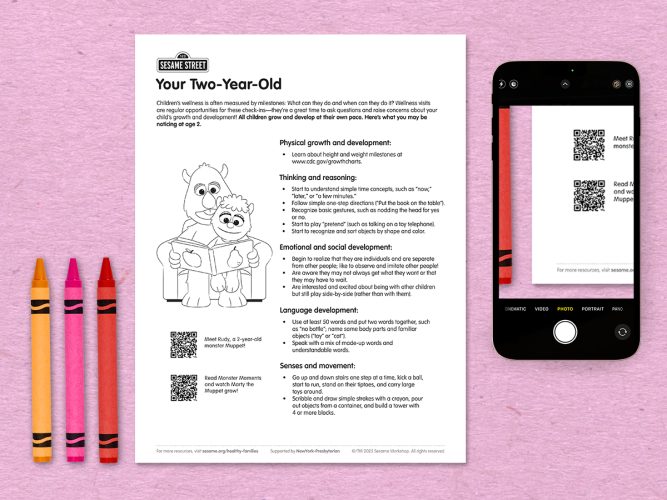
Milestones: Your Two-Year-Old
All children grow and develop at their own pace; use this chart to guide your expectations and observations so you can talk to your child’s pediatrician about questions or concerns.
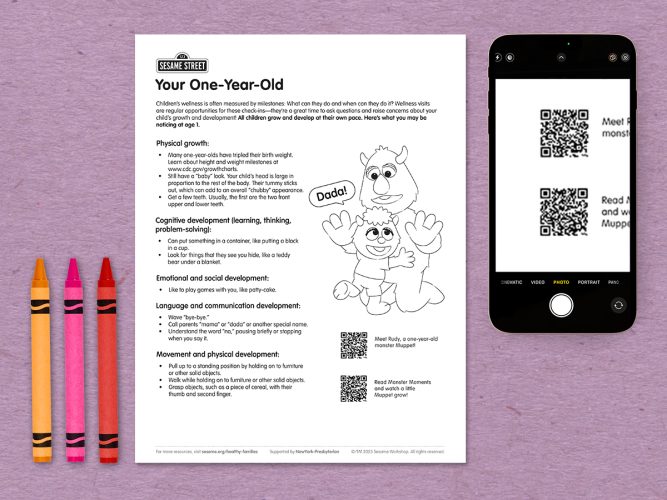
Milestones: Your One-Year-Old
All children grow and develop at their own pace; use this chart to guide your expectations and observations so you can talk to your child’s pediatrician about questions or concerns.
