
Strategies for Bully Busting
Expert advice for parents and caregivers on the best ways to handle bullying.
It may show up as name-calling, or being left out, or being teased all the time or physically pushed around, but sadly, bullying is something that autistic children are much too familiar with. Studies have shown that they are two to three times more likely to be bullied than neuro-typical children. The effects can be serious and long-lasting. Children on the autism spectrum are especially vulnerable because it may be difficult for them to speak out. It is up to the parents, teachers, and caregivers to make sure they have strategies in place to protect them. Here are some tips that may help:
- Stay observant. If a child starts behaving differently, withdrawing, or acting out, or stops being interested in the activities she normally likes, that could be a sign there’s a problem.
- Talk, talk, talk. In the case of a child who’s verbal, try to figure out the problem by talking . . . and listening! It requires extra reassurance and patience. Remember that the child is “reporting,” not “tattling,” and it’s important that they do so. Keep your questions simple and concrete. Stay calm, so as not to add to the stress. Tell the child that it’s up to grown-ups to keep them safe, and that everyone will work together to make that happen. Remind the child that it is not their fault.
- Make sure everyone understands autism. That means each person who interacts with the child, from bus drivers to recess supervisors. Special training sessions for staff on how to handle and recognize bullying are extremely helpful. It may also help to give peers the chance to learn about autism and ask questions. If possible, try volunteering in the class or program to get a better read on what’s going on. Raise awareness, and you’re halfway there!
- Depending on the child, you may be able to offer some simple strategies, such as saying loudly, “That’s not okay,” enlisting the help of a nearby grown-up, or having a classroom “buddy” (or several!). Most peers, when given the chance, want to be part of the solution.
- Don’t ignore the problem! It won’t go away on its own, and it needs to be dealt with as quickly as possible. Enlist the help of staff, professionals, other parents, and children. Brainstorm ideas. The more people buy in to the strategy, the more likely it is to work.
- The plan should include getting the bully some help, too. Bullying doesn’t happen in a vacuum. What is causing this child to act out?
- Even after the problem is taken care of, continue to monitor and work collaboratively so that it doesn’t happen again, to anyone.
This advice for parents, caregivers, and other community members can help keep everyone safe and secure.
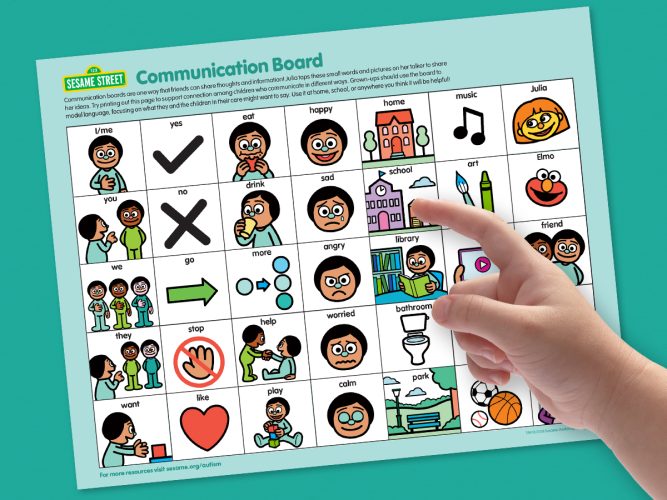
Sesame Street Communication Board
Sesame Street’s first AAC board features core vocabulary and beloved characters.
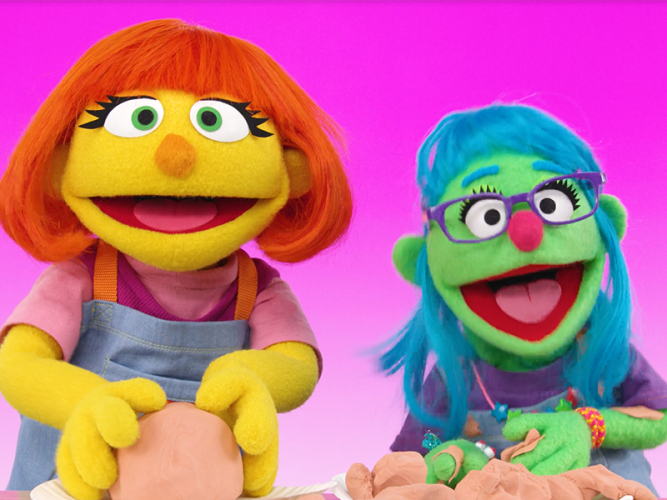
Lots of Ways to Connect
This music video features Julia, Elmo, Ji-Young, and Zoe as they celebrate the many ways friends can connect with each other.
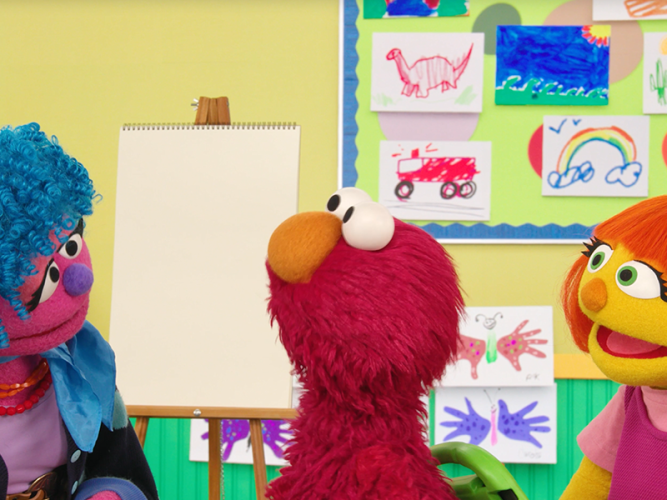
Lots of Ways to Be Kind
Julia and Elmo welcome a new friend to their classroom, each in their own way.
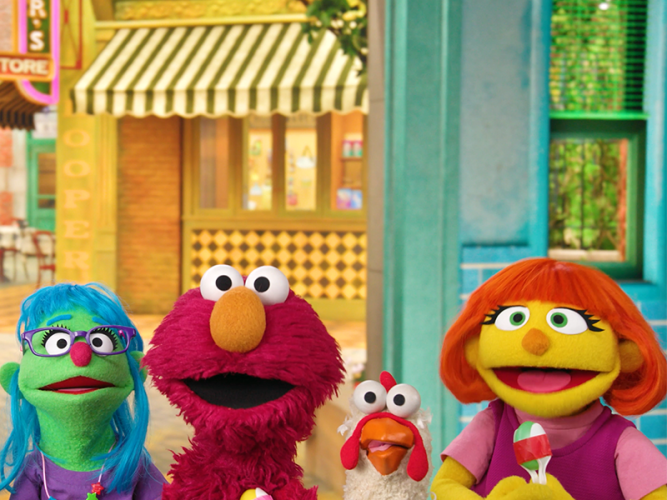
Lots of Ways to Participate
Julia and Elmo participate in story time, each in their own way.

Building Inclusive Spaces: Tips for Supporting Our Neurodivergent Learners
An article to help parents and educators plan for success when designing inclusive activities for autistic and neurotypical children in group settings.
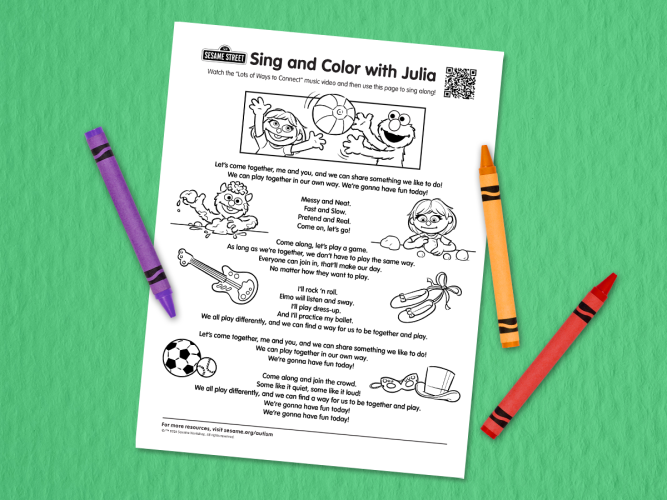
Sing and Color with Julia
Use this page to sing along with Julia and her friends.
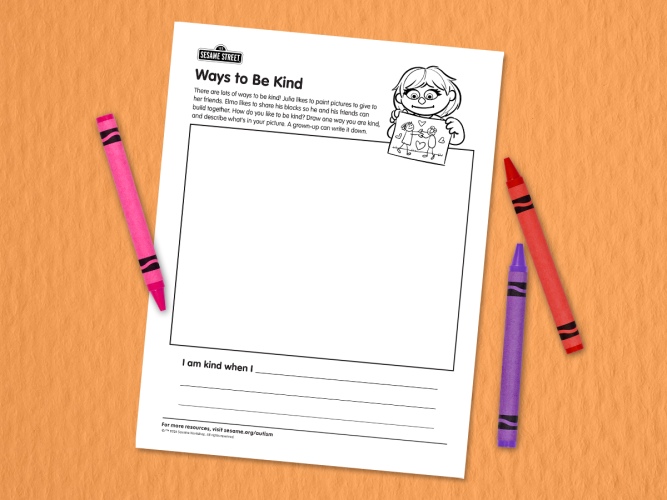
Ways To Be Kind
A drawing activity that celebrates the many ways to be a kind friend.