Earthquake Safety for Children
An article about steps your family can take to prepare for an earthquake.
Earthquakes happen quickly and are often unexpected, but there are things the whole family can prepare and practice. Letting children know what to expect and how to act goes a long way toward soothing their worries and helping them stay safe.
Explain and Answer
Start by letting children know what an earthquake is. You might say, in an earthquake the ground shakes because rocks have moved deep underground. Sometimes more shaking can follow the first earthquakes; this is called an aftershock. Assure children that your family has a plan to stay safe together, and do your best to answer their questions simply and honestly.
Practice Makes Perfect!
Help children practice safety strategies so they feel confident and prepared if the unexpected happens. Teach children to Drop (to their hands and knees), Cover (their arms and neck with their hands and crawl under a table or heavy piece of furniture), and Hold On (to something sturdy like the leg of a table) if they ever feel shaking. You might print and color this poster and place it somewhere visible to remind your family to practice often.
Consider Different Situations
- Give children examples of how to stay safe no matter where they are when an earthquake hits. Explain: If you’re in bed, cover your head and neck with pillows, and lay face down until the shaking stops.
- If you’re in a car, stay inside with your seatbelt buckled until the shaking ends. If you’re outdoors, move away from big things like buildings, trees, power lines, and streetlights. Get low and stay there until the shaking stops. Cover your head with your hands.
Plan Together
Explore this family guide for ways to get children involved in preparing an emergency kit and family plan. You might include some of your community members in the planning too! Is there a neighbor you can make a plan to check on in the event of an emergency? Visit ready.gov or The Red Cross for more specifics on how to get your home and community ready for an earthquake.
This resource was developed in collaboration with Patricia Frost from the National Pediatric Disaster Coalition.
The National Pediatric Disaster Coalition, Inc., is a 501 (c) (3) nonprofit whose mission is to advance community preparedness, mitigation, response, and recovery for infants, children, and their families during disasters. https://npdcoalition.org/
How to Keep Children Cool in a Heat Wave
Tips on keeping children safe when temperatures rise.

Ideas for Poor Air Quality Days
An article with tips on how to prepare for poor air quality days.
You’re Doing Amazing
A message from Sesame Street for caregivers recovering from an emergency.
Adjusting to a New Normal
A message of care for those dealing with the long-term effects of an emergency.
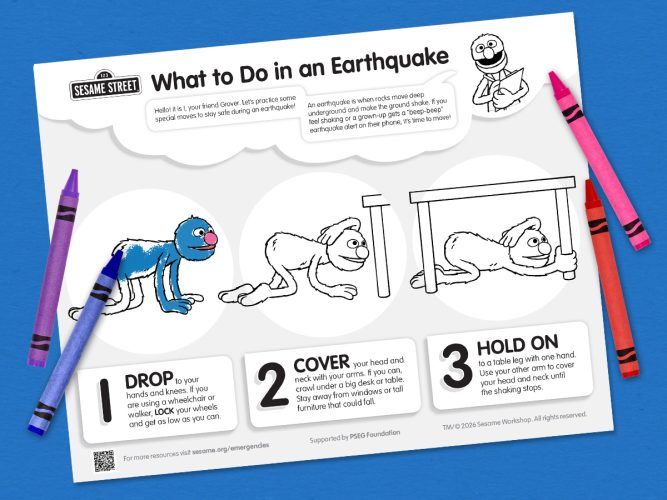
What to Do in an Earthquake for Children |Drop, Cover, Hold On
A safety poster to help children learn how to stay safe in an earthquake.
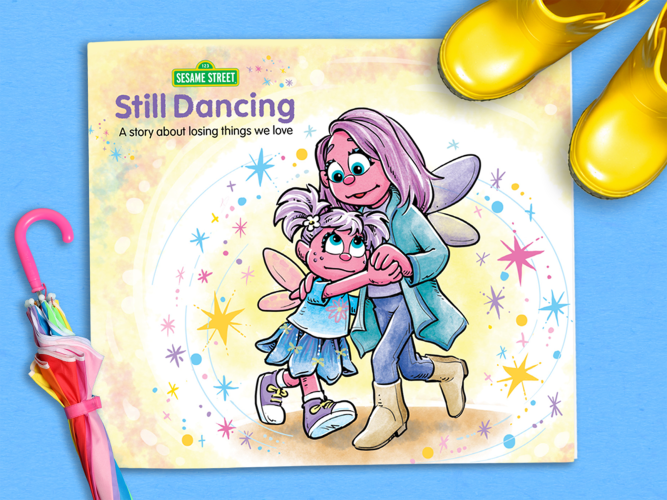
Still Dancing
A storybook to help children cope with losing something they loved.